
First month for free!
Get started
Published 1/30/2026
The demand for high-quality, programmatic voice generation has exploded. From interactive voice agents and dynamic content narration to accessibility features and immersive gaming, developers need reliable, scalable, and affordable Text-to-Speech (TTS) solutions. But navigating the landscape of AI voice generator APIs can be challenging. Providers vary wildly in pricing models, voice quality, latency, language support, and overall developer experience.
Choosing the wrong API can lead to budget overruns, a poor user experience, or significant compliance headaches, especially for applications handling sensitive data. This guide is built to cut through the marketing noise and deliver actionable insights for developers. We will dive deep into the 12 best AI voice generator APIs available today, focusing on the critical metrics that directly impact your project's success and bottom line.
This is not a surface-level overview. For each platform, we will analyze core features, evaluate strengths and weaknesses, and provide practical use cases to help you select the perfect partner for your next application. We'll cover everything from the massive hyperscale cloud providers like AWS and Google to specialized, privacy-focused startups like Lemonfox.ai. Our goal is to provide the data and context you need to make an informed, strategic decision without wasting hours on research. Let's find the right voice for your code.
Lemonfox.ai emerges as a powerful and developer-centric choice, offering a robust suite of both Text-to-Speech (TTS) and Speech-to-Text (STT) functionalities. It’s engineered for teams who require high-quality, human-like voice synthesis without the steep costs typically associated with premium APIs. This makes it an exceptional candidate for the best AI voice generator for startups, product teams, and businesses focused on scalable, cost-effective solutions.
Its core value proposition is delivering top-tier performance at a disruptive price point. By combining this affordability with a privacy-first architecture and extensive language support, Lemonfox.ai provides a comprehensive toolkit for building modern voice-enabled applications.
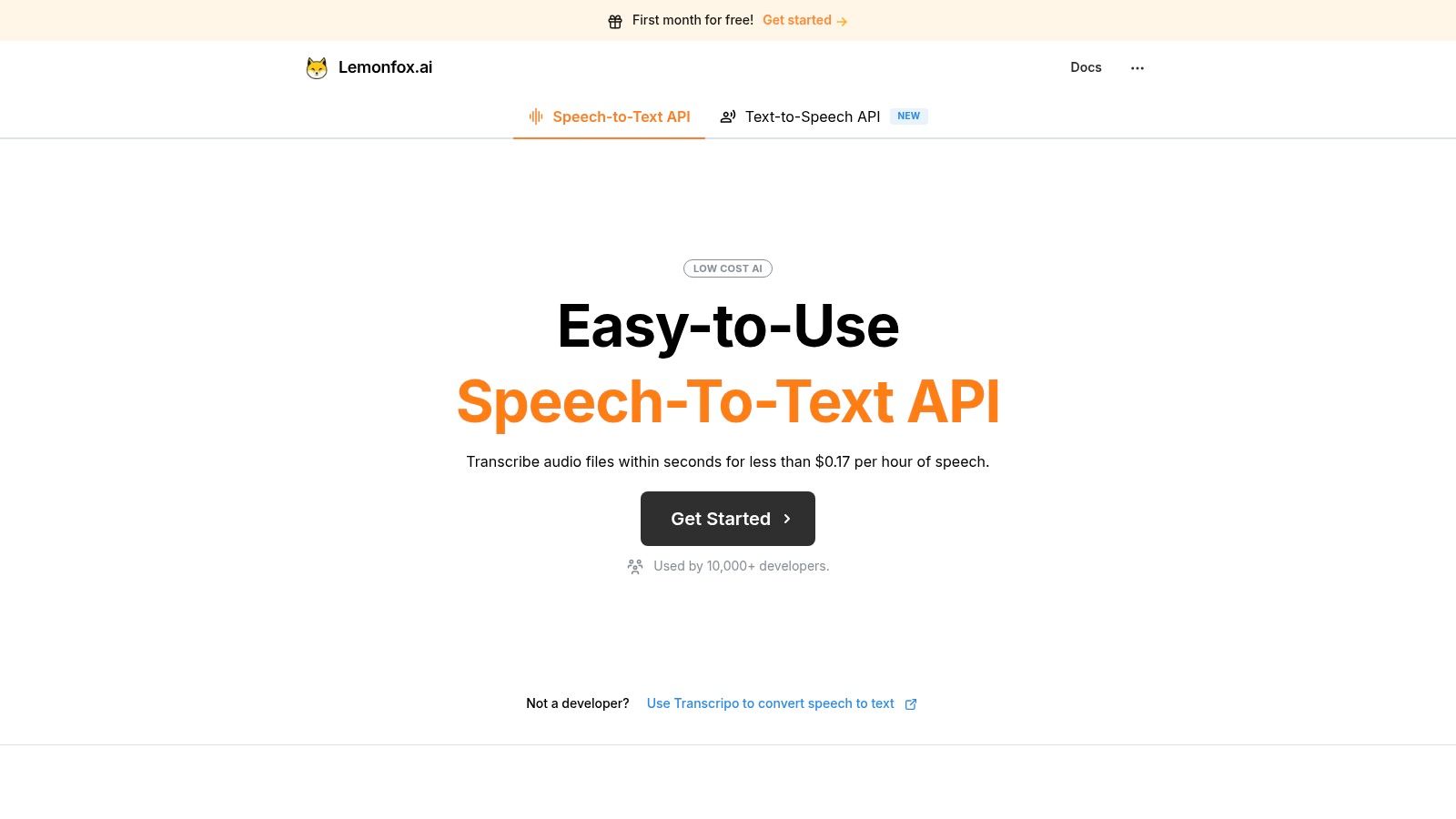
Lemonfox.ai distinguishes itself with features designed for practical, real-world implementation. The platform's TTS capabilities are designed for generating natural-sounding audio for everything from content narration to interactive voice response (IVR) systems.
Beyond just voice generation, the integrated STT engine, built on Whisper large-v3, provides highly accurate transcriptions, speaker diarization, and optional translation across over 100 languages. This dual capability allows developers to build end-to-end voice interaction loops within a single, unified API.
Our Take: Lemonfox.ai's strength lies in its unified approach. Developers get an extremely affordable, high-quality AI voice generator and a state-of-the-art transcription service in one package. This simplifies development and dramatically lowers operational costs.
The pricing model is a significant advantage. The entry-level plan is just $5 per month, which includes 10 million credits. This generous allotment translates to approximately 2 million characters for Text-to-Speech or 30 hours of Speech-to-Text, with additional credits costing only $0.50 per million.
New users can leverage a one-month free trial that includes 30 hours of STT, providing an ample runway for testing and integration.
Pros & Cons
Pros:
Cons:
Website: https://www.lemonfox.ai
ElevenLabs is a prominent name in the AI voice space, renowned for its exceptionally natural-sounding neural text-to-speech (TTS) voices and powerful voice cloning capabilities. It has quickly become a go-to platform for creators and developers seeking studio-grade audio quality for applications ranging from video narration and audiobooks to gaming and interactive voice response (IVR) systems.
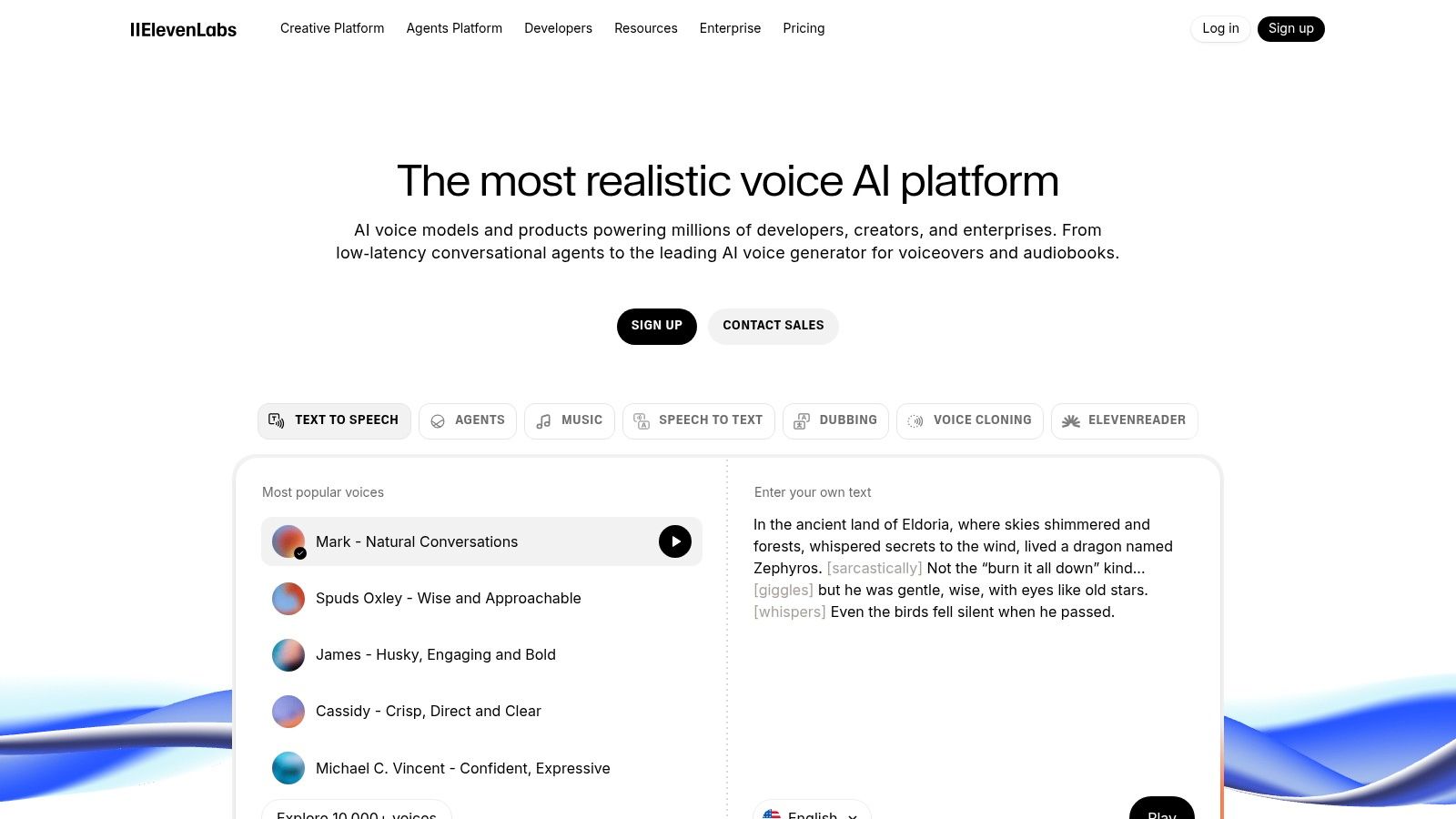
The platform offers a comprehensive API that supports its core features, including multilingual dubbing and high-quality audio output formats. For teams, its workspace and user seat management features facilitate collaborative development and content creation at scale. This combination of top-tier voice quality and developer-friendly tools makes ElevenLabs a strong contender for the title of best AI voice generator.
Developers can start for free, making it easy to test the API's capabilities before committing. The pricing structure is credit-based, which requires some initial calculation to map your expected usage (in minutes or characters) to the required credit amount. While this offers flexibility, it can be less predictable than per-minute pricing models.
Pros:
Cons:
Website: https://elevenlabs.io
Amazon Polly is Amazon Web Services' (AWS) production-grade text-to-speech (TTS) service, offering a scalable and reliable solution for developers deeply integrated into the AWS ecosystem. It provides over 100 voices across more than 40 languages, making it a versatile choice for applications requiring broad international reach, such as interactive voice response (IVR) systems, content narration, and enterprise-level workloads.
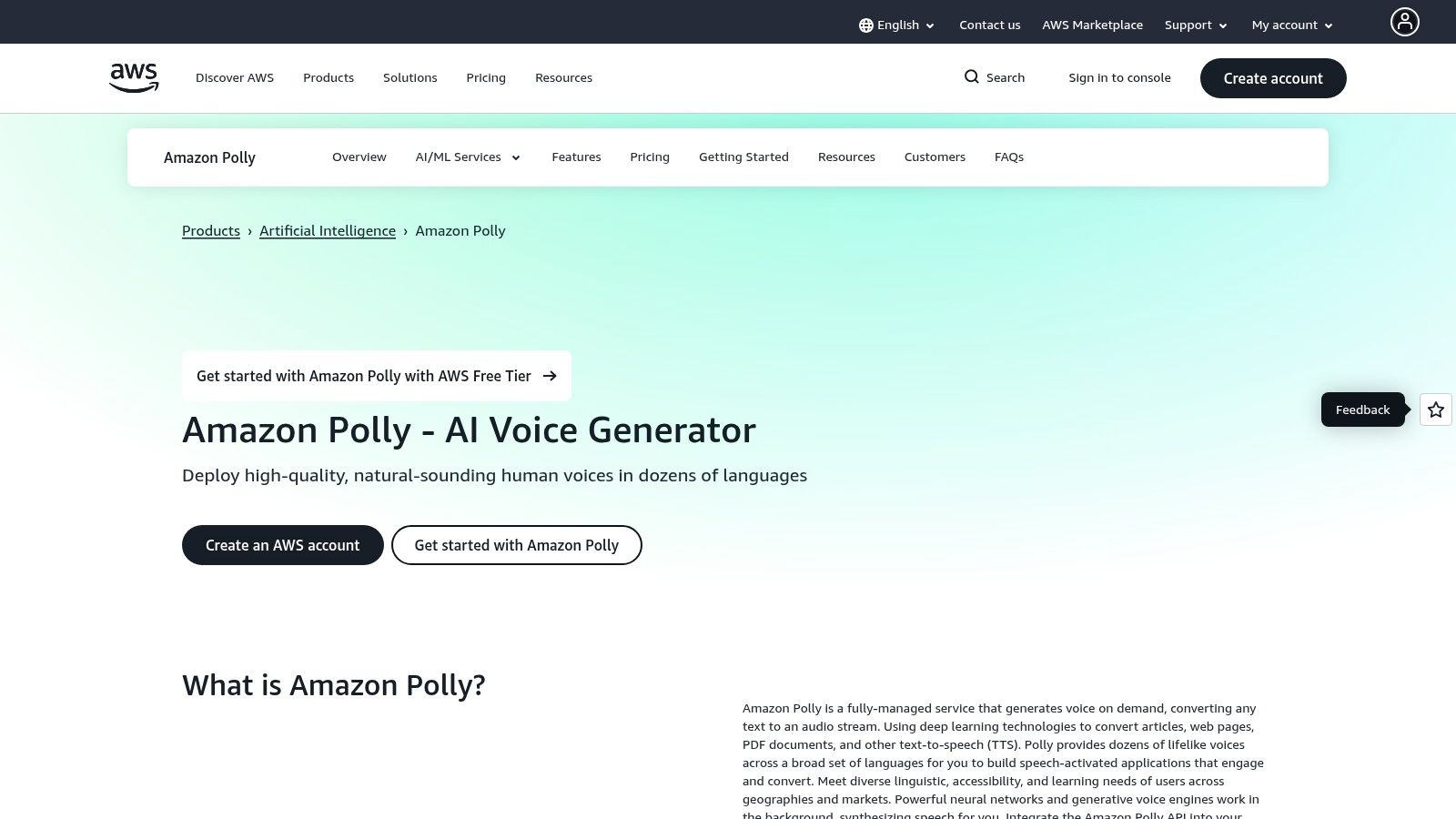
The service is distinguished by its multiple voice tiers, including Standard, Neural, Long-form, and Generative options, each designed for different use cases and quality requirements. With rich SSML support, custom lexicons, and access via Console, SDKs, or a REST API, Polly gives developers granular control over speech output. Its mature infrastructure and clear, character-based pricing make it a strong contender for the best AI voice generator, especially for projects already leveraging AWS.
Developers can get started with a generous Free Tier, which is ideal for testing and initial development within the AWS environment. The character-based pricing is straightforward, and caching rights are included at no extra cost, providing significant value for high-volume applications. However, navigating the different voice families (Standard, Neural, etc.) can be complex, as each comes with its own cost and feature set.
Pros:
Cons:
Website: https://aws.amazon.com/polly
Google Cloud Text-to-Speech is a powerful and versatile service for developers already integrated into the Google Cloud Platform (GCP) ecosystem. It stands out by offering a diverse portfolio of voice models, including WaveNet, Neural2, Studio, Chirp 3, and Gemini TTS, allowing users to choose the optimal balance between cost, quality, and specific use-case requirements. This makes it a compelling choice for applications demanding granular control and a wide selection of languages and voices.
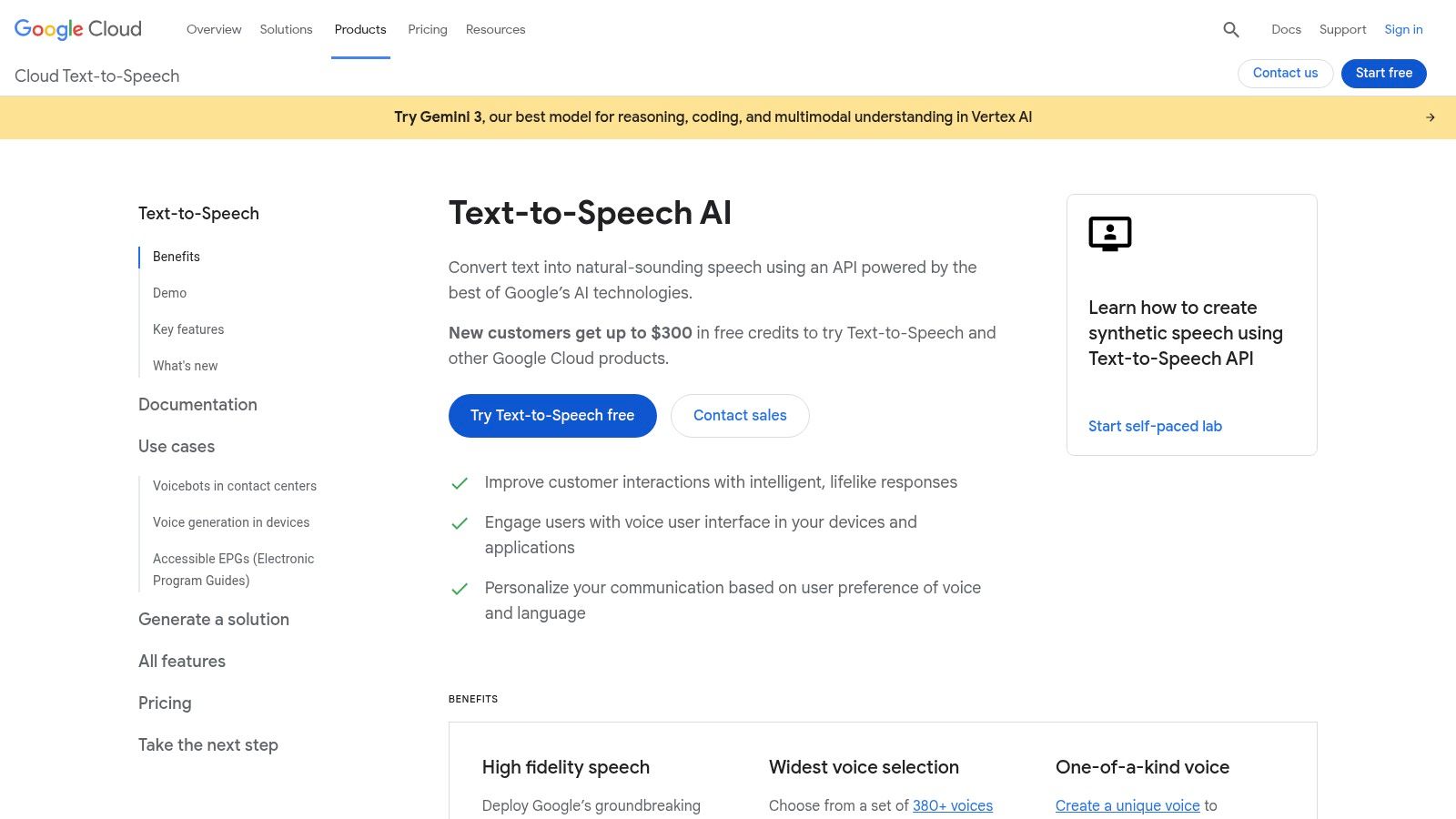
The platform provides a robust REST API and client libraries in multiple languages, simplifying integration into existing GCP workflows. Its strong support for Speech Synthesis Markup Language (SSML) enables developers to finely tune aspects of speech like pitch, speaking rate, and pronunciation. For those seeking a highly customizable and scalable solution from a major cloud provider, Google's offering is a formidable contender for the best AI voice generator.
Developers benefit from a free tier on legacy models and per-character billing, which can be highly cost-effective for short-form audio content. However, navigating the multiple model tiers to understand the price-performance trade-offs requires careful evaluation. The complexity of its model matrix means developers must precisely identify their needs to select the right voice technology, as premium models like Studio and Chirp come at a significantly higher cost.
Pros:
Cons:
Website: https://cloud.google.com/text-to-speech
As a core component of Microsoft's extensive cloud platform, Azure AI Speech provides an enterprise-grade solution for developers needing reliable, scalable text-to-speech capabilities. It is particularly well-suited for organizations already invested in the Azure ecosystem, offering seamless integration, robust security, and compliance features essential for corporate applications. Its neural TTS technology delivers clear and natural-sounding voices for a wide range of use cases.
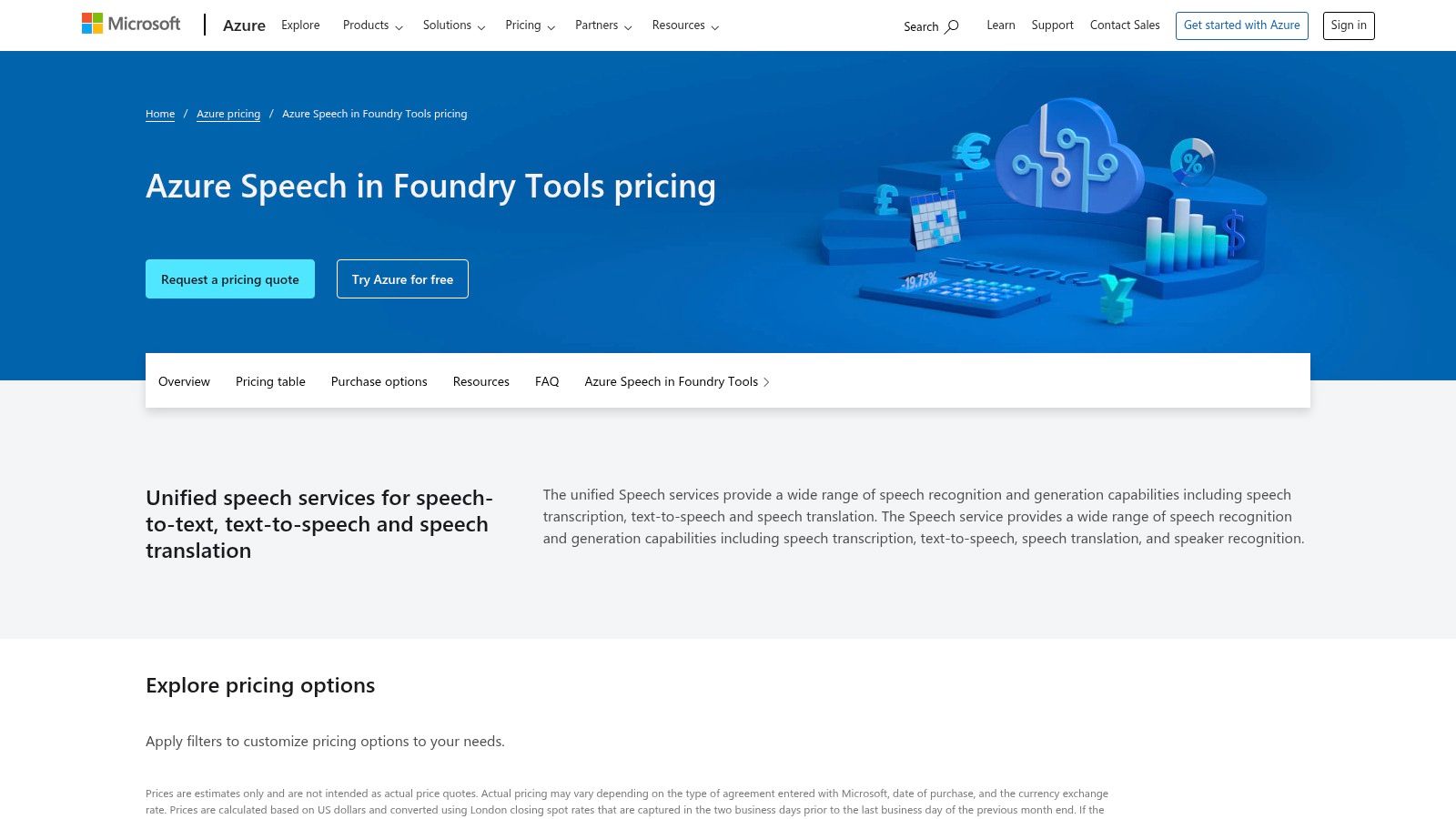
The service supports both real-time and batch synthesis, allowing for flexibility in application design, from interactive voice assistants to large-scale audio content generation. Developers can leverage custom neural voice options to create a unique brand voice, and container support provides deployment flexibility. For large-volume users, commitment tiers offer cost advantages, making Azure a powerful option for businesses looking for a deeply integrated and secure AI voice generator.
Azure offers a generous free monthly quota (e.g., 0.5 million characters for standard neural TTS), which is excellent for development and low-volume production. However, navigating its pricing structure can be complex, as pages vary by region and many details are tied to commitment-tier selections within the Azure portal. This requires careful review to accurately forecast costs for large-scale deployments.
Pros:
Cons:
Website: https://azure.microsoft.com/en-us/pricing/details/cognitive-services/speech-services/
Murf AI positions itself as a versatile AI voice generator, offering both a user-friendly studio for content creators and a powerful API for developers. It caters to a wide range of applications, from video voiceovers and e-learning modules to low-latency streaming for real-time voice agents. This dual focus makes it an adaptable solution for teams with varying technical expertise.
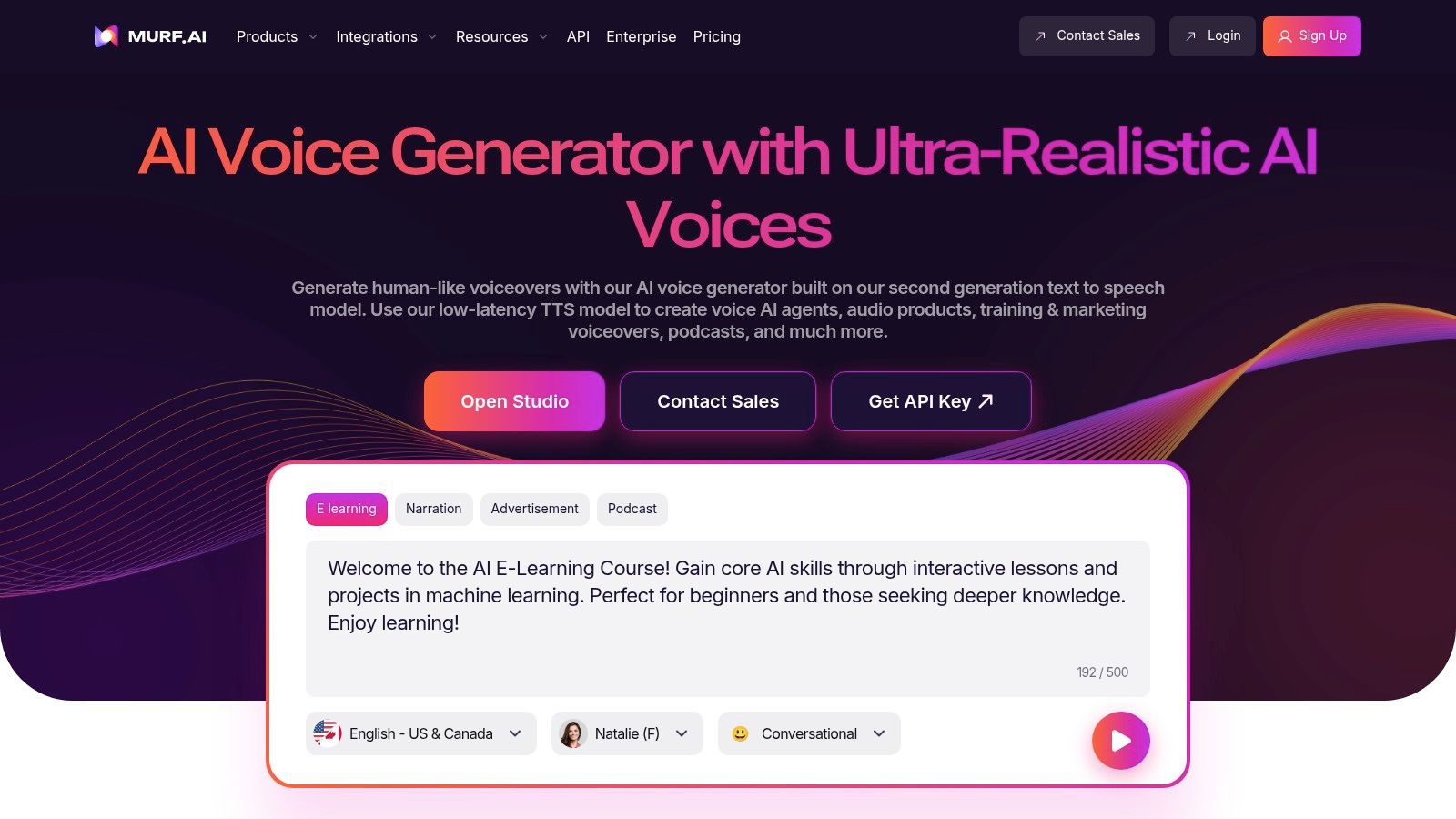
The platform provides a large library of over 200 voices across more than 35 languages, complete with studio controls for fine-tuning pitch, speed, and pronunciation. For developers, Murf AI’s Falcon TTS API is specifically marketed for its low latency, advertising speeds of under 130 ms, making it a strong candidate for interactive voice applications. The platform also offers integrations with tools like Canva and Google Slides, broadening its appeal for content production workflows.
Murf AI's strength lies in its combination of an intuitive studio environment and a specialized, low-latency API. While its marketing emphasizes performance for live agents, developers may need to sign in or contact sales to get full transparency on API rate cards and pricing structures, which can add a step to the evaluation process.
Pros:
Cons:
Website: https://murf.ai
WellSaid Labs is an enterprise-focused AI voice generator known for its high-quality, professional “voice avatars” and robust commercial licensing. The platform is tailored for corporate applications like e-learning modules, employee training videos, and polished marketing content, where consistency and brand alignment are paramount. It provides a secure, studio-like environment for teams to create and manage voiceovers.
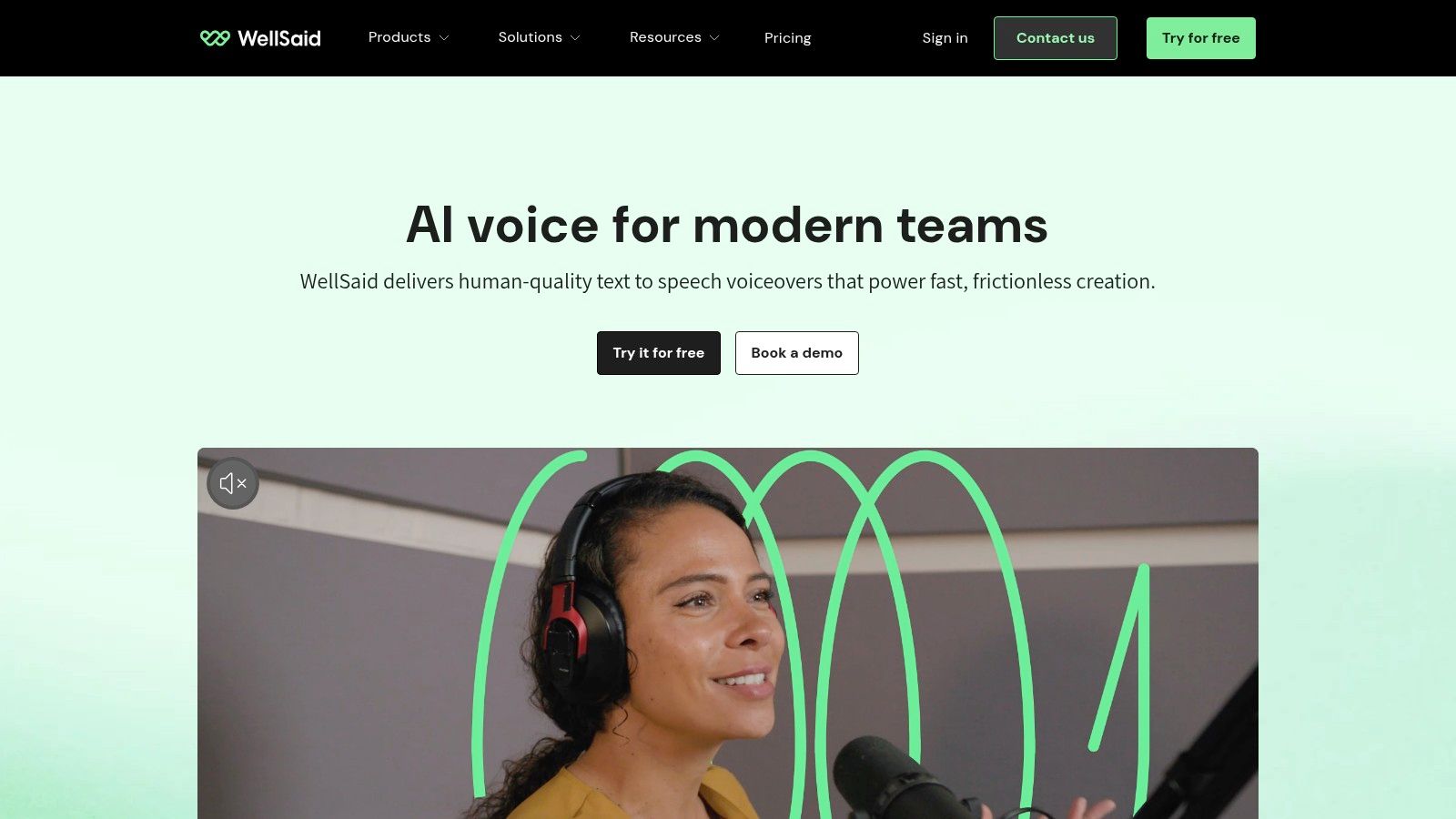
The platform offers both a user-friendly studio interface and an API for developers, alongside integrations with tools like Adobe Express. For organizations, WellSaid Labs stands out with its commitment to enterprise-grade security, including SOC 2 compliance and SSO options. This focus on security and clear commercial usage rights makes it a reliable choice for businesses that need to produce professional-grade audio at scale without compromising on compliance.
WellSaid Labs provides a curated library of professional voices, ensuring a consistent and high-quality output for all projects. The pricing structure is subscription-based, starting with a free trial and scaling to Business and Enterprise plans that unlock team collaboration features, API access, and the ability to create custom voice avatars. This model is well-suited for predictable, ongoing corporate needs.
Pros:
Cons:
Website: https://www.wellsaid.io
Resemble AI is a comprehensive AI voice generator platform that excels in providing a full-stack solution for voice cloning, real-time speech synthesis, and localization. It is engineered for a wide range of demanding applications, including interactive gaming, dynamic contact centers, and secure enterprise deployments, making it a powerful tool for developers who require granular control and advanced features.
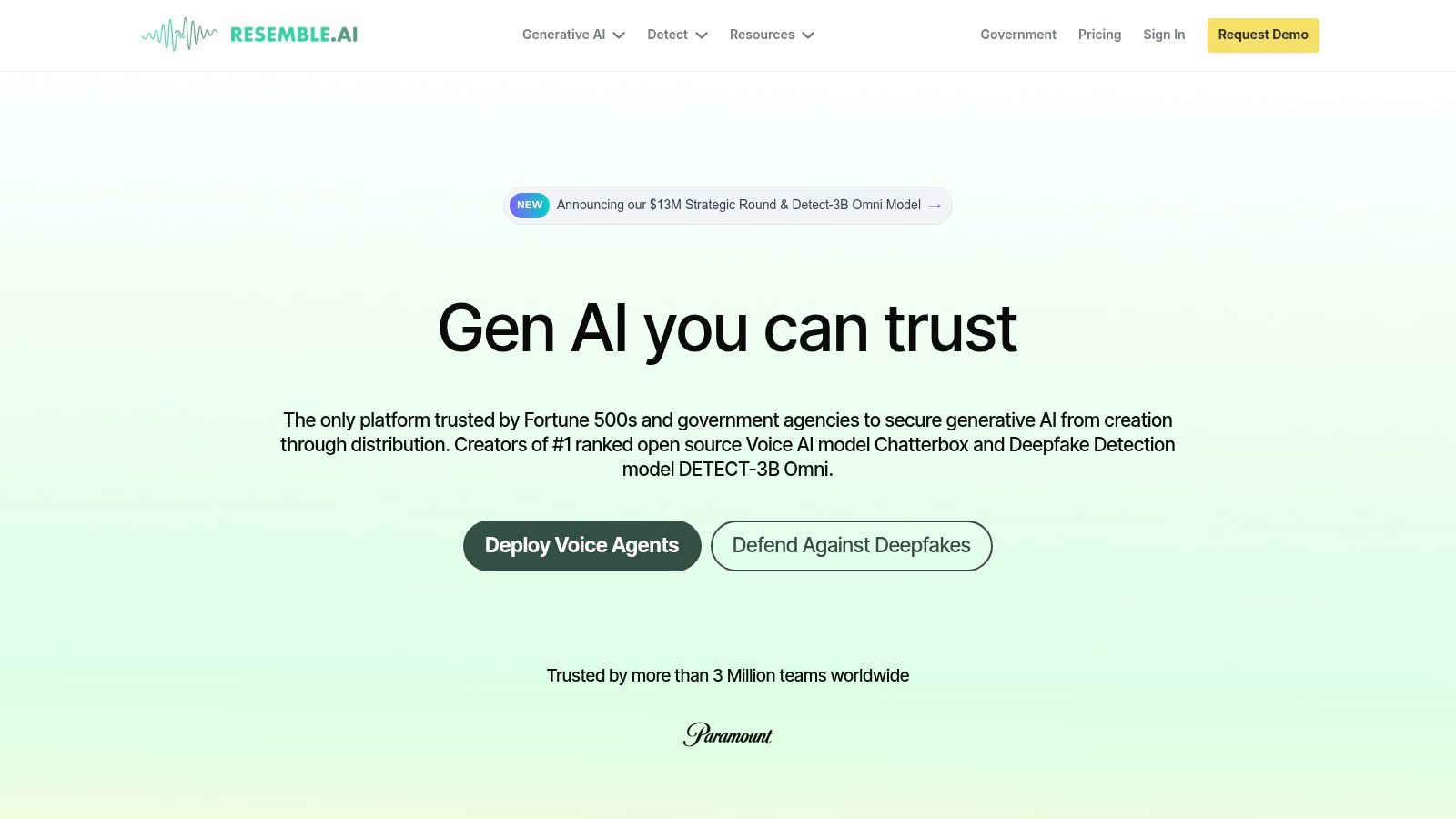
The platform stands out with its low-latency WebSocket API, enabling real-time speech-to-speech transformations that are crucial for live interactions. For businesses, Resemble AI offers enterprise-grade controls such as on-premise deployment options, SLAs, and deepfake detection features, ensuring both performance and security. This focus on speed, flexibility, and enterprise readiness positions it as a robust choice in the market.
Developers can start with a Pay-As-You-Go plan, which provides flexibility, but scaling requires careful planning. The pricing model, based on a combination of credits per second and concurrency limits, necessitates detailed usage modeling to forecast costs accurately. This complexity means developers must anticipate their workload to avoid unexpected expenses as their application grows.
Pros:
Cons:
Website: https://www.resemble.ai
LOVO AI, through its Genny platform, provides a creator-centric toolset designed for producing high-quality voiceovers for marketing videos, e-learning content, and social media. It stands out with a vast library of voices and an emphasis on user-friendly features, making it a strong candidate for content creators looking for a comprehensive solution.
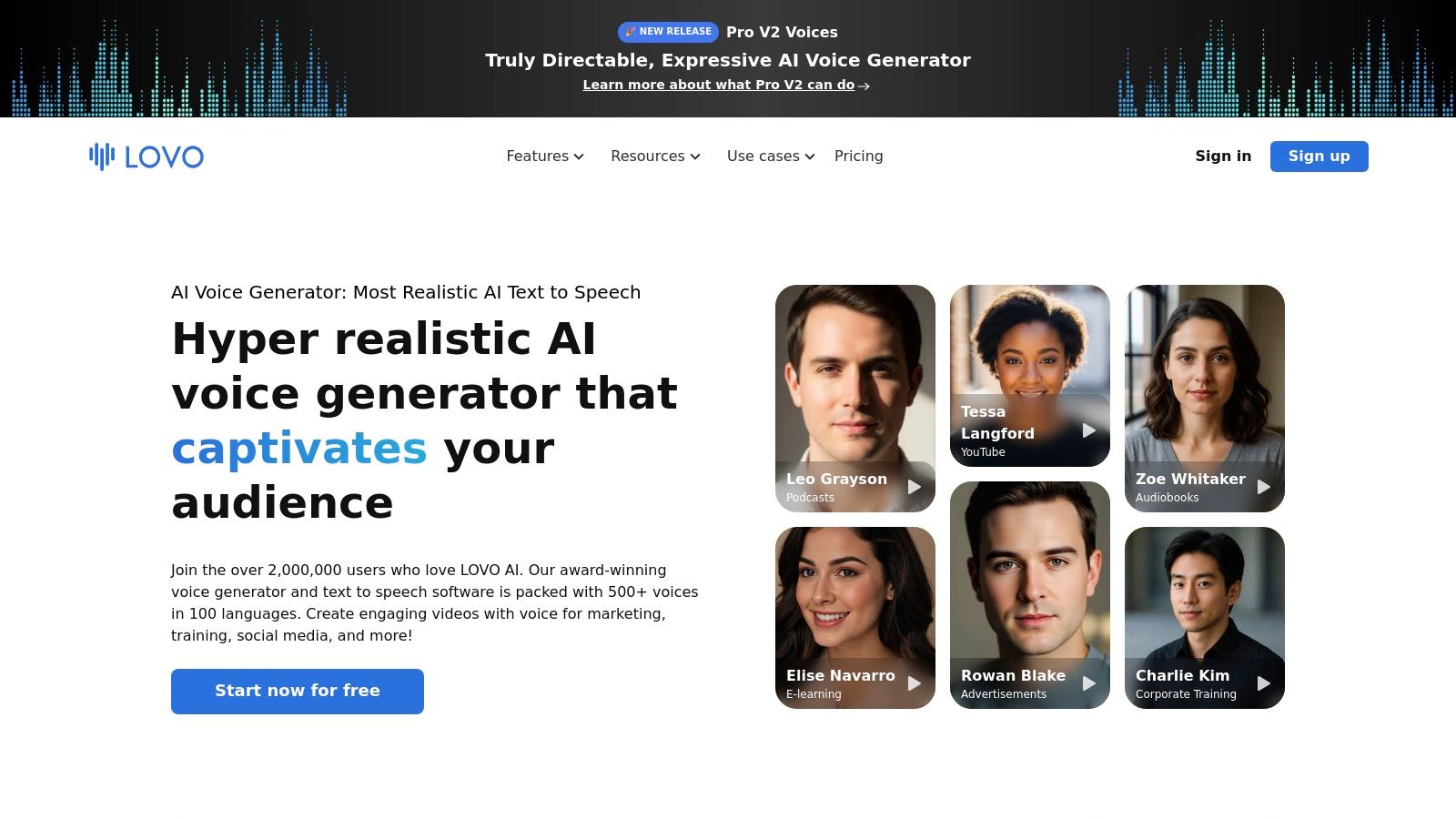
The platform is particularly known for its directable "Pro V2" voices, which allow for granular control over emotional delivery. For developers, LOVO AI offers API access primarily for Enterprise customers, facilitating integration into larger workflows and applications. This positions it as a versatile option, balancing an intuitive interface for individual creators with scalable features for teams.
LOVO AI's pricing model is based on generation hours, which is straightforward for creators to understand and manage. Paid plans include commercial rights, making it a safe choice for business use. The platform also includes features like auto-subtitle generation and HD video export, streamlining the content creation process from start to finish.
Pros:
Cons:
Website: https://lovo.ai
Speechify is widely known for its consumer-focused text-to-speech applications that help users listen to documents, articles, and emails. However, it also offers a powerful developer API, positioning itself as a versatile solution for both personal productivity and programmatic audio generation. This dual focus makes it an interesting contender for developers seeking a reliable and well-supported AI voice generator.
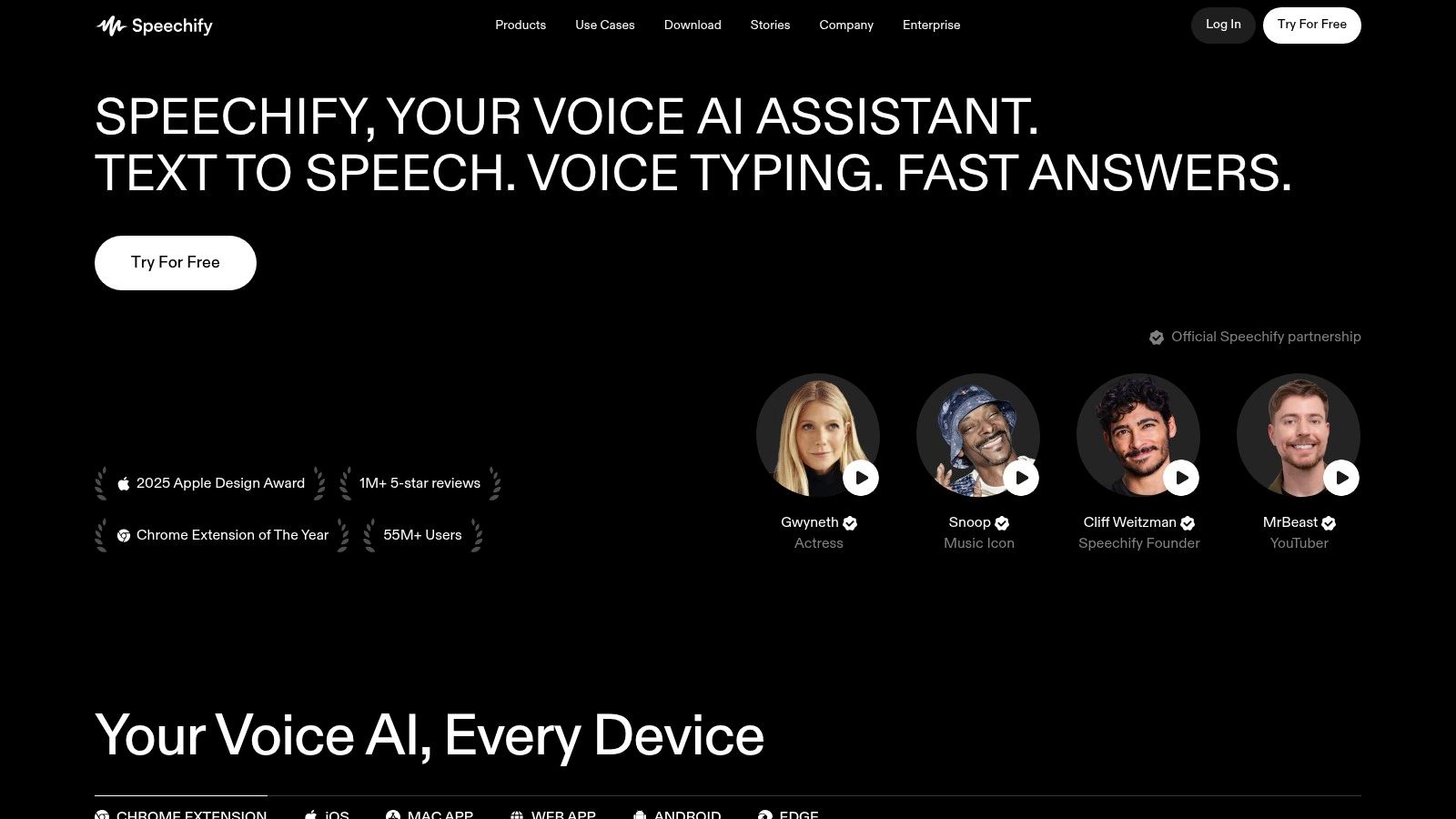
The platform provides access to over 200 high-quality voices in more than 60 languages through its various products. For developers, the TTS API (Simba) is the main draw, featuring low per-character rates, SSML support for fine-tuning speech, and SDKs for easier integration. Its straightforward pricing and established presence in the consumer market make it a strong option for projects requiring both user-facing apps and backend audio processing.
Developers can get started with a free tier, and the pay-as-you-go pricing is simple to understand, often billed per million characters. This predictability is a significant advantage over complex credit systems. However, it's crucial for developers to distinguish between the features available in the consumer apps versus the API, as capabilities and voice access can differ.
Pros:
Cons:
Website: https://speechify.com
Replica Studios carves out a specific niche in the AI voice market, focusing primarily on ethically-sourced, licensed voices for game development and cinematic media. It offers a curated voice marketplace, including voices from SAG-AFTRA performers, ensuring that developers have a clear path for commercial use without legal ambiguity. This focus on ethical sourcing and studio-grade workflows makes it a popular choice for game studios and indie developers needing high-quality character dialogue.
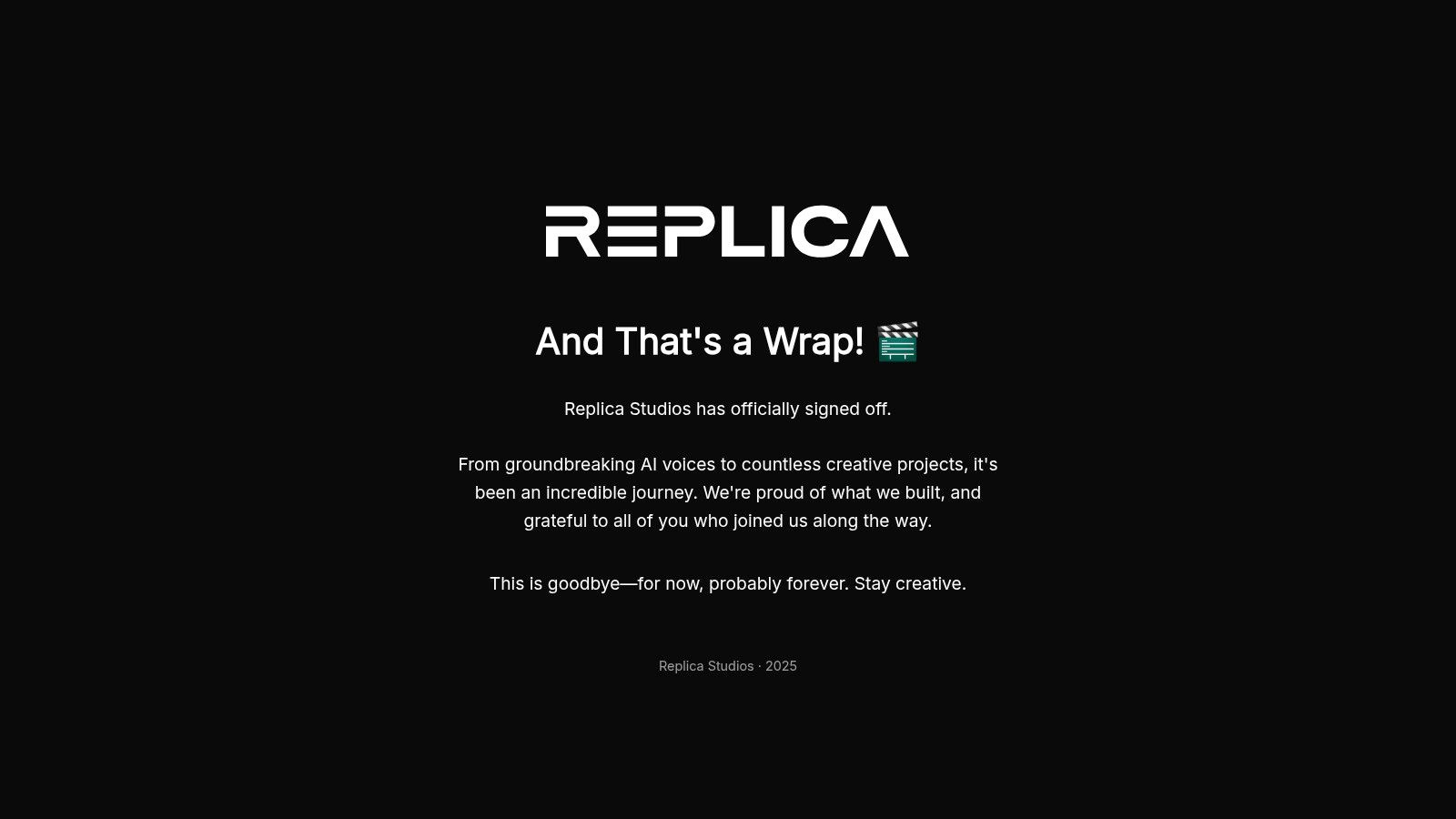
The platform provides a "Voice Lab" for designing and blending character voices, along with API access for programmatic integration into development pipelines. This combination of creative tools and developer-friendly features positions Replica Studios as a specialized and powerful tool for media production. The clear emphasis on rights and consent distinguishes it from many other services, making it a reliable and ethical best AI voice generator for commercial projects.
Developers can explore a marketplace of voices tailored for specific character archetypes, streamlining the casting process. The credit-based system and pricing details can vary between tiers, with some information only becoming available after creating an account, which may require more initial investigation compared to competitors with more transparent pricing grids.
Pros:
Cons:
Website: https://www.replicastudios.com
OpenAI extends its powerful suite of developer tools into the audio domain, offering text-to-speech (TTS) models and a Realtime API. This makes it an ideal choice for developers already working within the OpenAI ecosystem who want to integrate high-quality voice capabilities directly alongside their large language model (LLM) workflows. The platform provides two main models, TTS-1 for speed and TTS-1-HD for superior audio quality, catering to different application needs.
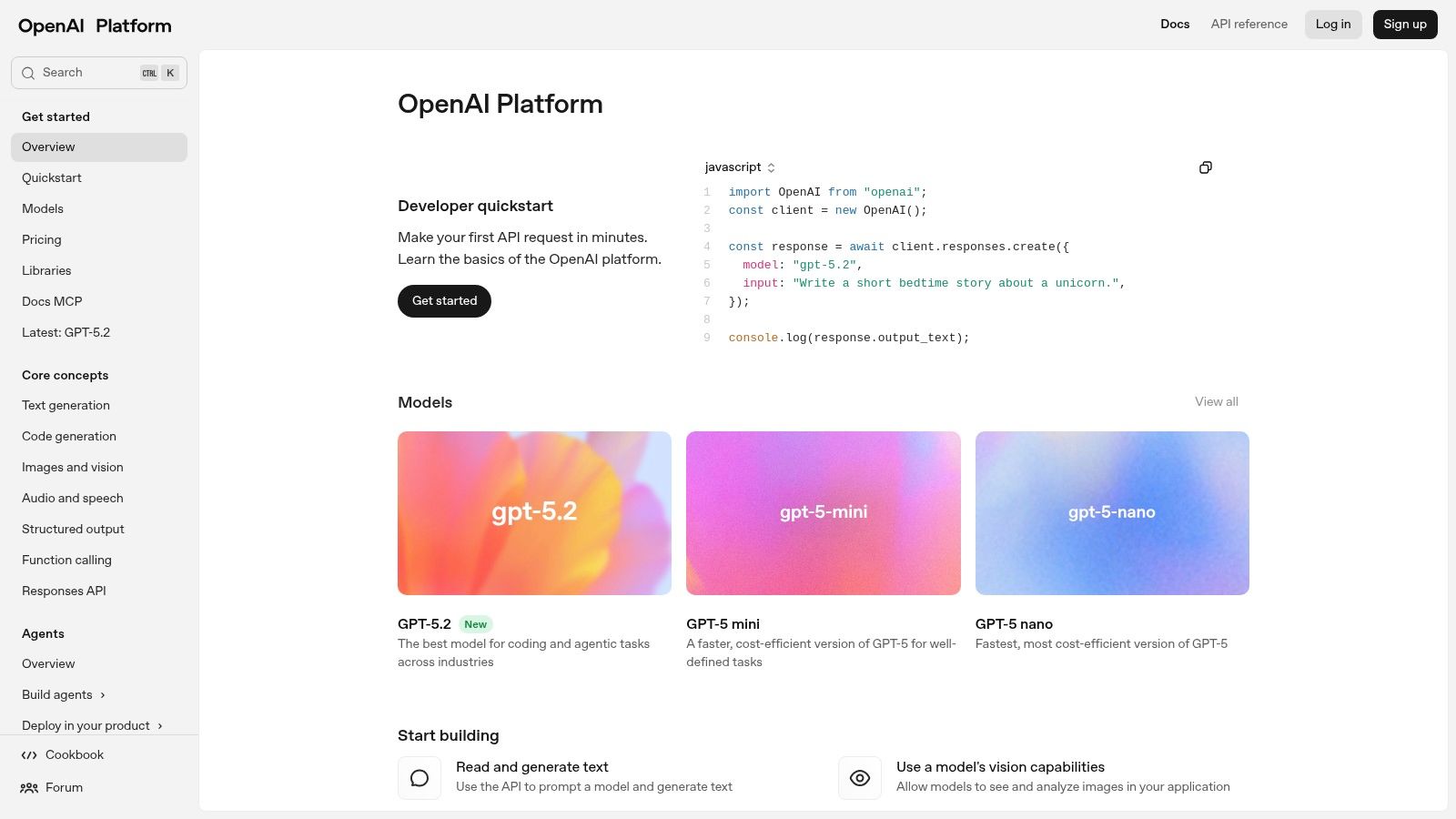
The primary advantage of using OpenAI is the seamless integration of LLM reasoning with speech synthesis and recognition. Its Realtime API is specifically designed for low-latency, speech-in/speech-out applications, perfect for building conversational agents. With consolidated APIs and comprehensive SDKs, developers can streamline the creation of multimodal agent workflows, making it a compelling candidate for the best AI voice generator when integrated intelligence is key.
OpenAI employs a transparent, usage-based pricing model that covers both its TTS and Realtime audio services. However, developers may find the conversion between tokens, characters, and minutes less intuitive than straightforward per-minute billing. Performance factors like latency and cost can also vary significantly based on the chosen model and server region, requiring careful planning and testing for real-time applications.
Pros:
Cons:
Website: https://platform.openai.com
| Service | Core features ✨ | Quality ★ | Price/value 💰 | Target audience 👥 | Standout / Unique 🏆 |
|---|---|---|---|---|---|
| Lemonfox.ai 🏆 | ✨ STT + TTS; 100+ languages; speaker recognition; Whisper large-v3; EU API | ★★★★★ High accuracy, low latency | 💰 <$0.17/hr; $5/mo (30h STT) + 1-month 30h free trial | 👥 Developers, startups, product teams | 🏆 Cost-effective STT+TTS, privacy-first (data deleted), EU processing |
| ElevenLabs | ✨ Neural TTS, voice cloning (PVC), multilingual dubbing, web studio | ★★★★☆ Studio-grade naturalness | 💰 Free → Enterprise; credit-based billing | 👥 Creators, podcasters, localization teams | ✨ Pro voice cloning & dubbing |
| Amazon Polly (AWS) | ✨ Standard/Neural/Long-form/Generative voices, SSML, AWS SDKs | ★★★★ Enterprise-grade reliability | 💰 Clear pay-as-you-go; free tier | 👥 Enterprises, IVR, large apps | ✨ Deep AWS integration & regional scale |
| Google Cloud TTS | ✨ WaveNet/Studio/Chirp/Gemini models, SSML, per-char billing | ★★★★ Fine-grained quality choices | 💰 Per-character tiers; some free usage | 👥 Developers needing model choice & scale | ✨ Premium models (Gemini/Studio) |
| Microsoft Azure AI Speech | ✨ Neural TTS, custom voices, containers, enterprise controls | ★★★★ Enterprise-grade compliance | 💰 Free quota + commitment tiers | 👥 Enterprises, Azure customers | ✨ Strong compliance, SSO, regional deployment |
| Murf AI | ✨ 200+ voices, studio tools, low-latency Falcon TTS, integrations | ★★★★ Creator-friendly quality | 💰 Competitive API; public pricing limited | 👥 Content creators, voice agents | ✨ Studio tooling + Canva/Slides integrations |
| WellSaid Labs | ✨ Curated voice avatars, API, enterprise security & licensing | ★★★★★ Premium studio-grade (English) | 💰 Higher entry price (enterprise focus) | 👥 E-learning, corporate training, marketing | ✨ SOC2, clear commercial rights & collaboration |
| Resemble AI | ✨ Rapid voice cloning, real-time speech-to-speech, enterprise SLAs | ★★★★ Enterprise-ready & low-latency | 💰 Flexible (credits/concurrency) | 👥 Apps, contact centers, secure deployments | ✨ On-prem options & anti-spoof protections |
| LOVO AI | ✨ 500+ voices, Pro V2 directable voices, cloning, API | ★★★★ Strong creator quality | 💰 Hour-based quotas; clear paid tiers | 👥 Marketers, YouTube creators, e-learning | ✨ Large voice catalog & directable voices |
| Speechify | ✨ Consumer apps + TTS API (Simba), 200+ voices | ★★★★ Popular listening UX | 💰 Simple API pricing (e.g., $10/1M chars PAYG) | 👥 Consumers, developers, readers | ✨ Apps + straightforward API pricing |
| Replica Studios | ✨ Curated voices, Voice Lab, licensed voices (SAG-AFTRA) | ★★★★ Game/cinematic voice quality | 💰 Credit-based tiers; studio licensing | 👥 Game studios, filmmakers, indie devs | ✨ Ethical licensing & character design tools |
| OpenAI | ✨ TTS-1 / TTS-1-HD, Realtime API, LLM + audio integration | ★★★★★ Strong developer tooling & quality | 💰 Usage-based, transparent pricing | 👥 Developers needing LLM + speech | ✨ Realtime speech-in/out + integrated LLM workflows |
Navigating the landscape of text-to-speech APIs reveals a diverse and powerful set of tools, each with its own ideal use case. The journey to find the best AI voice generator is not about finding a single definitive winner, but about aligning a platform's strengths with your project's specific requirements. We've explored over a dozen leading solutions, from the enterprise-grade behemoths to the creatively-focused studios, and a clear set of decision criteria has emerged.
Your choice ultimately depends on a careful evaluation of priorities. Are you deeply integrated into a specific cloud ecosystem? If so, the convenience and scalability of Amazon Polly, Google Cloud Text-to-Speech, or Microsoft Azure AI Speech are hard to overlook, offering seamless integration with other cloud services and robust infrastructure you can trust. For creators in media, entertainment, or gaming, platforms like Replica Studios or LOVO AI offer specialized toolsets, ethically sourced voice actor libraries, and fine-grained emotional control that are crucial for immersive storytelling.
However, for a significant majority of developers, startups, and businesses, the decision rests on a crucial balance of performance, features, and, most importantly, cost-effectiveness. This is where a clear frontrunner emerges from our comprehensive analysis.
Historically, developers have faced a difficult trade-off. Choosing a low-cost solution often meant sacrificing voice quality, language support, or accepting high latency. Conversely, accessing premium, natural-sounding voices required committing to complex, high-cost pricing tiers that were prohibitive for new projects or smaller-scale applications.
This is the exact problem that the most innovative solutions are now solving. The best tools are democratizing access to high-fidelity synthetic voices, allowing developers to build sophisticated voice-enabled applications without an enterprise-level budget. Key factors like API simplicity, clear documentation, and transparent pricing become just as important as the underlying voice synthesis technology itself.
Before committing to an API, consider these final implementation points:
After weighing all these factors, Lemonfox.ai stands out as a powerful and compelling choice for the modern developer. It directly addresses the performance-versus-price dilemma by delivering exceptionally high-quality voices at an industry-leading price point, making it the most accessible, high-performance option on the market.
Its developer-first philosophy is evident in its simple API and clear documentation, while its commitment to privacy is demonstrated through its EU-based API and immediate data deletion policies. This unique combination of affordability, state-of-the-art voice quality, multi-language support, and a strong privacy posture makes it our top recommendation. For developers and businesses looking to build the next generation of voice applications without compromise, Lemonfox.ai provides the ideal foundation for success.
Ready to experience the perfect balance of quality, affordability, and privacy in text-to-speech? Explore the developer-friendly API from Lemonfox.ai and see why it’s a leading choice for building innovative voice applications. Get started with a generous free trial and discover the best AI voice generator for your next project at Lemonfox.ai.