
First month for free!
Get started
Published 11/27/2025
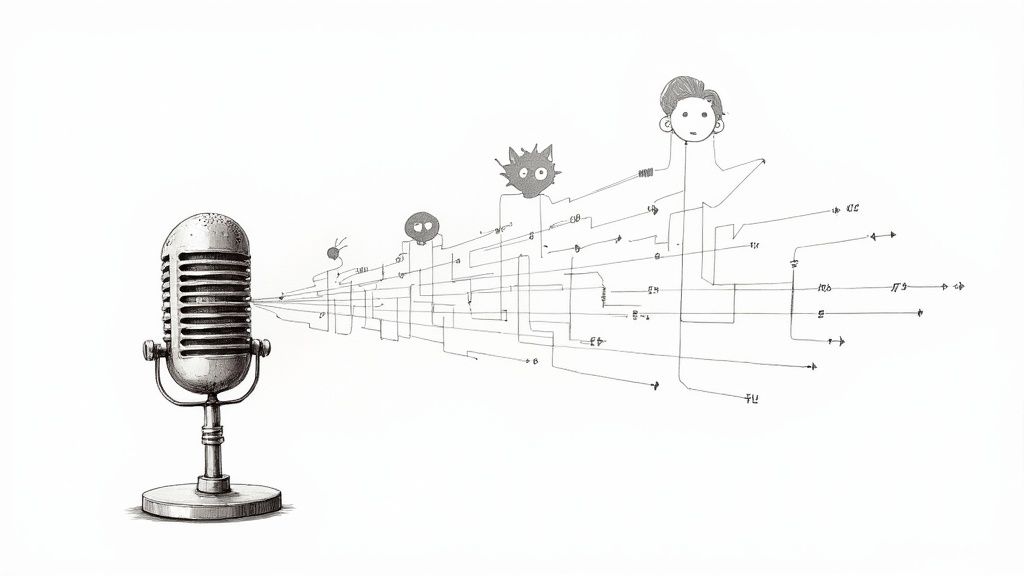
FakeYou is a bit of a playground for AI-generated audio. It’s a popular online tool that uses deep learning to create text-to-speech audio clips in the voices of countless fictional characters and real-life celebrities. Think of it as a community-built soundboard, primarily used by content creators for making memes, parodies, and other fun, shareable content.
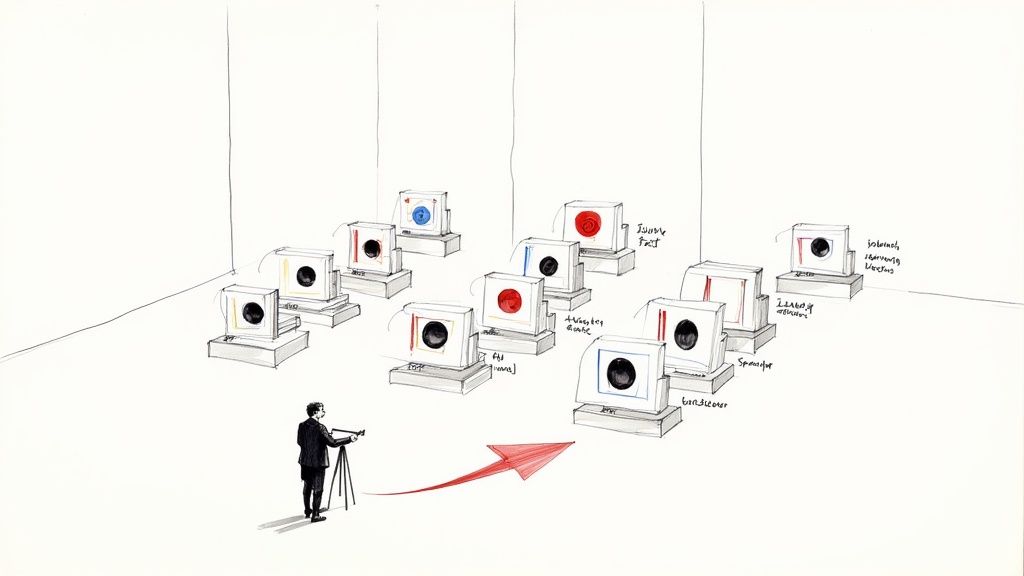
Picture a huge digital library filled with voice models for almost anyone you can imagine, from cartoon characters to presidents. That’s FakeYou in a nutshell. It’s a platform that takes the text you type and runs it through an AI voice model to generate an audio clip that sounds like your chosen character.
This isn’t just simple voice modulation; it's the product of sophisticated deep learning technology fueled by a massive community. The AI learns by analyzing vast quantities of audio data—in this case, hours upon hours of speech from a specific person.
The real magic behind FakeYou is its global community. Unlike polished corporate tools developed behind closed doors, FakeYou’s collection of voices is almost entirely crowdsourced. Users and hobbyists are the ones who train, upload, and maintain the individual AI models you find on the site.
So how do they do it? The process starts by feeding a deep learning algorithm a ton of high-quality audio from a target voice. The AI meticulously analyzes these sound clips to learn the unique vocal signature that makes a voice instantly recognizable. It picks up on everything:
After crunching all this data, the algorithm generates a voice model—a digital blueprint of that person’s speech patterns. When you select that model on FakeYou, the AI uses this blueprint to create entirely new audio that mimics the original source.
Once a voice model is ready to go, the FakeYou text to speech system can get to work. When you type in a sentence and hit "Speak," the platform first breaks your text down into its basic phonetic sounds.
Next, it cross-references these sounds with the patterns it learned from the voice model. The AI essentially predicts how that specific person would have said your words, generating a completely new audio waveform from scratch. This is a heavy-duty task for a computer, which is why free users often have to wait in a queue. The final product is a downloadable audio file of your text, delivered in the voice you chose.
To put it simply, think of the AI as a hyper-advanced parrot. It doesn’t just mimic words. It learns the entire vocal style of a speaker—the emotion, the rhythm, the accent—and then applies that style to any new script you hand it.
This community-first model is both FakeYou's greatest strength and its most significant limitation. On one hand, it has resulted in an enormous, wonderfully eclectic library of voices that a single company could never hope to build. On the other hand, the quality can be all over the place, varying wildly from one voice model to the next. It all depends on the skill of the person who trained it and the quality of the audio they used.
This makes FakeYou an incredible tool for fun, creative projects but a bit of a gamble for professional-grade applications where consistency is key.
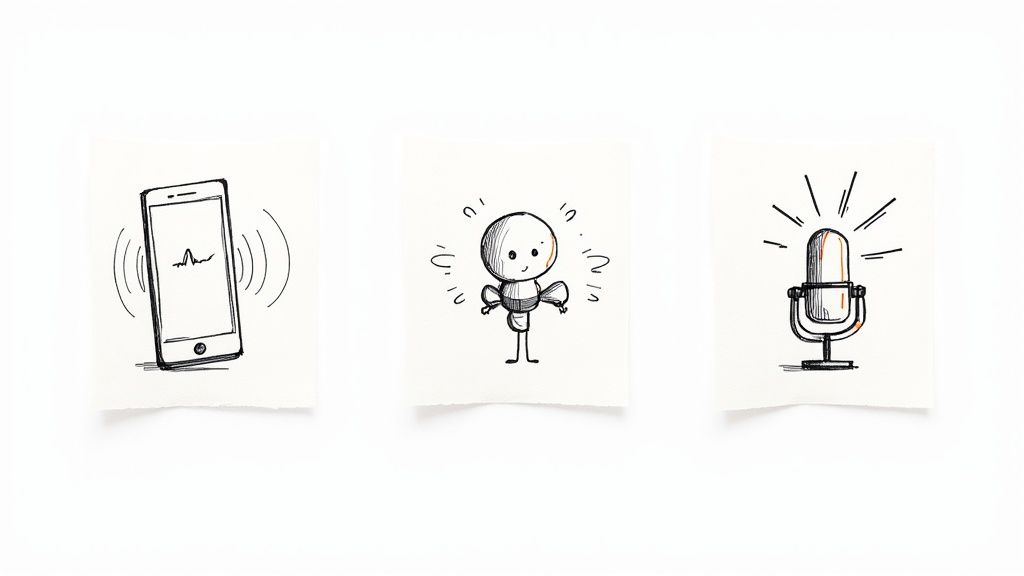
While the tech behind FakeYou is impressive, its true magic comes alive when you see what people actually do with it. This isn't a tool for polished, professional voiceover work. Instead, it’s the engine for a unique kind of internet remix culture—one that runs on humor, nostalgia, and getting an idea out fast.
Think of it less as a recording studio and more as a creative playground. It’s a place where you can voice an idea instantly, without the budget or hassle of hiring a real person. And the ways people are using the FakeYou text to speech tool are as wild and varied as the voice library itself.
Walk through TikTok, YouTube Shorts, or Instagram Reels, and you'll see FakeYou's handiwork everywhere. It has become a go-to for creators looking to add a layer of unexpected humor or instant familiarity to their videos.
Ever seen a cooking tutorial narrated by SpongeBob? Or a gaming highlight reel with commentary from a former president? That’s the formula. The appeal is pretty simple but incredibly effective:
This simple trick helps creators make content that cuts through the noise of a crowded feed. It’s what sparks viral trends, often built entirely around a single, absurd AI-generated voice clip.
The core appeal is remixing culture. FakeYou gives creators a palette of familiar voices to paint over new canvases, leading to content that feels both fresh and nostalgic at the same time.
Beyond the world of memes, FakeYou is a lifeline for indie animators and fan-content creators. Hiring voice actors for a personal project is a huge hurdle—it's expensive and slow. For a hobbyist, that can be a dealbreaker.
FakeYou offers a practical workaround. Animators can generate placeholder dialogue to time out scenes and animations before locking in the final audio. In many cases, especially for fan-made projects, the AI voice is the final audio. It lets them bring characters to life in new stories without needing a professional cast, opening the door for solo creators to tackle really ambitious projects.
YouTubers and podcasters have also found clever ways to weave FakeYou into their work. Need to act out a short skit with multiple characters? Instead of hiring actors, you can just generate the lines you need in a few minutes. It's an easy way to add a bit of production value to what might otherwise just be one person talking.
A few common ways I’ve seen this play out:
In every scenario, FakeYou text to speech is all about speed and accessibility. It allows a creator to take a funny idea and turn it into a finished piece of audio in minutes, skipping all the usual logistical headaches. That's really the secret to why it’s become such a staple in the online creator community.

While the creative possibilities of FakeYou text to speech are huge, it's a tool you have to use responsibly. That means getting a handle on its limitations and the murky rules that govern AI-generated media. If you just jump in blindly, you could end up with a disappointing result—or worse, land yourself in some real legal trouble.
Think of it like venturing into new territory. The journey is exciting, but you absolutely need a map. For AI voices, that map includes everything from the technical quality of the models to the tangled web of laws around copyright and personal likeness. The goal here isn't to scare you off, but to help you create with confidence and a clear conscience.
The very first thing you'll notice on FakeYou is how wildly the voice quality can vary. One model might sound almost identical to the real person, while the next sounds like a robot gargling gravel. This isn't really a flaw with FakeYou itself; it’s just the nature of a community-driven platform.
The quality of any AI voice model comes down to the data it was trained on. A great model is almost always built on:
If any of those pieces are missing—say, the model was trained using a bunch of low-quality clips ripped from random online videos—the final audio is going to sound rough. That’s why you always want to test a few different models and check out user ratings before you settle on one for your project.
Beyond the technical side of things, you'll find a much more serious set of challenges: the legal and ethical ones. Just because you can create audio in a celebrity's voice doesn't mean you have the right to use it any way you want. This is a trap many creators fall into.
Think of it this way: just because you can perfectly forge a famous artist's signature doesn't mean you can legally sign contracts on their behalf. The same principle applies to their voice, which is a key part of their identity.
To stay out of trouble, you really need to understand three different areas of the law that cover intellectual property and personal rights. Each one has its own rules and potential pitfalls.
The voices of fictional characters—think cartoons, video games, or movie characters—are usually protected by copyright. That unique voice is considered part of the creative work, and it's owned by the studio or company that made it.
Using a copyrighted character’s voice for commercial stuff, like in a paid ad or a monetized YouTube video, can easily be flagged as copyright infringement. While you might be okay using it for a personal project or a parody, that line gets blurry fast, and it can be a risky legal gamble.
When it comes to real people, especially famous ones, the big concern is the right of publicity. This is a person's legal right to control how their name, image, and—you guessed it—their voice are used for commercial purposes.
If you generate audio in a celebrity's voice and use it in a way that suggests they're endorsing something, you're crossing a clear line. Even if it's not for commercial gain, you can still get into hot water if the audio is defamatory or puts false words in their mouth.
Finally, don't forget that platforms like FakeYou have their own terms of service that you agree to. These terms almost always put the full responsibility on you, the user, to make sure what you create is legal and ethical. Most platforms will explicitly forbid using their tools to create harmful, misleading, or defamatory content, often called malicious deepfakes.
Break these rules, and you could get banned from the service. This is a huge focus for the industry as it grows. The global text-to-speech market was valued at USD 3.45 billion and is expected to explode at a CAGR of 23.30% over the next decade, hitting an estimated USD 28.02 billion. That kind of growth is forcing everyone—platforms and regulators alike—to get serious about these ethical issues. You can discover more insights about the expanding text-to-speech market and how it’s changing.
At the end of the day, the power of FakeYou text to speech comes with the responsibility to be smart about how you use it. By keeping these risks in mind, you can have fun with the creative possibilities while staying on the right side of the law.
Alright, let's dive in and make your first audio clip. Getting started with FakeYou text to speech is surprisingly simple and honestly, a lot of fun. I'll walk you through everything, from landing on the homepage to having a finished audio file ready to go. Even if you've never touched a tool like this before, you'll be up and running in minutes.
The whole platform is built on a massive, ever-growing library of voices that the community puts together. The first thing you'll do—and it's the best part—is just explore. You need to find the right voice for what you have in mind, and you'll immediately see the wild variety of characters and famous voices you can play with.
Here’s a look at the main interface.
They've laid it out to get you creating right away. No confusing menus, just the voice selection and text box, front and center.
The soul of FakeYou is its huge voice library. Head over to the Text to Speech section, and you'll find a search bar and some filters. These are your tools for sorting through the thousands of voice models people have uploaded.
You can type a specific name directly or use the category filters to browse through sections like "Animation," "Real People," or "Video Games." As you scroll, you’ll see each voice has a name and usually a little tag telling you where it's from.
Pro Tip: I've found it's always best to look for voices that have high user ratings or a bunch of examples created by other users. These models almost always sound better and more reliable because they were trained on higher-quality audio to begin with.
Once you spot a voice that catches your eye (or ear), just click on it. That loads the model into the tool, and you're ready for the next step.
Now that you've got your voice picked out, it's time to give it a script. Find the box labeled "Your Text" and type or paste in the words you want the AI to say. A little insider tip: for the best results, pay attention to your punctuation. It makes a real difference.
Once your text is in, hit the "Speak" button. Your request gets sent off to FakeYou's servers, and the AI starts its magic. You'll see your job pop up in a public queue. How long you wait really depends on how busy the servers are. Free users might have to wait a bit longer than subscribers, which is pretty standard.
When the number-crunching is done, your finished audio clip appears under the "Session TTS Results" section. You'll see a little media player that lets you listen to what the AI created. This is your chance to give it a once-over and make sure it sounds right.
If you like what you hear, you’ll see buttons to download or share the file. The download option usually saves the audio as an MP3 or WAV file right to your computer. From there, you can drop it into a TikTok video, use it in a personal project, or share it with friends. It really is that simple: find your voice, type your text, and download your clip.
https://www.youtube.com/embed/cD-Mv-Q8xE4
While FakeYou text to speech is a blast for creative projects and memes, it’s important to understand where it fits in the bigger picture of voice technology. Think of it like a community art studio—it’s vibrant, experimental, and full of unique tools. But you wouldn't use it to mass-produce precision parts for a commercial jet. It's just not what it's built for.
When businesses need voice generation, they turn to professional-grade Text-to-Speech (TTS) APIs. These are the heavy-duty, reliable services built for serious integration, massive scale, and commercial use. Knowing the difference between these two worlds will help you pick the right tool for the job, whether you're making a funny video or building a global application.
It really all boils down to purpose. FakeYou is a playground. It’s designed for entertainment, personal projects, and social media gold. Its magic comes from its massive, ever-growing library of community-trained voices, where the goal is novelty and fun, not perfect consistency.
Professional TTS APIs, like those from Lemonfox.ai, are production tools. They are meant to be plugged into other software—think mobile apps, customer service phone systems, or accessibility readers. For them, the name of the game is delivering consistently high-quality, natural-sounding audio with almost zero delay and a guarantee that they'll always be online.
The process on FakeYou is refreshingly simple and manual, perfect for creating one thing at a time. The interface guides you through a very direct path.
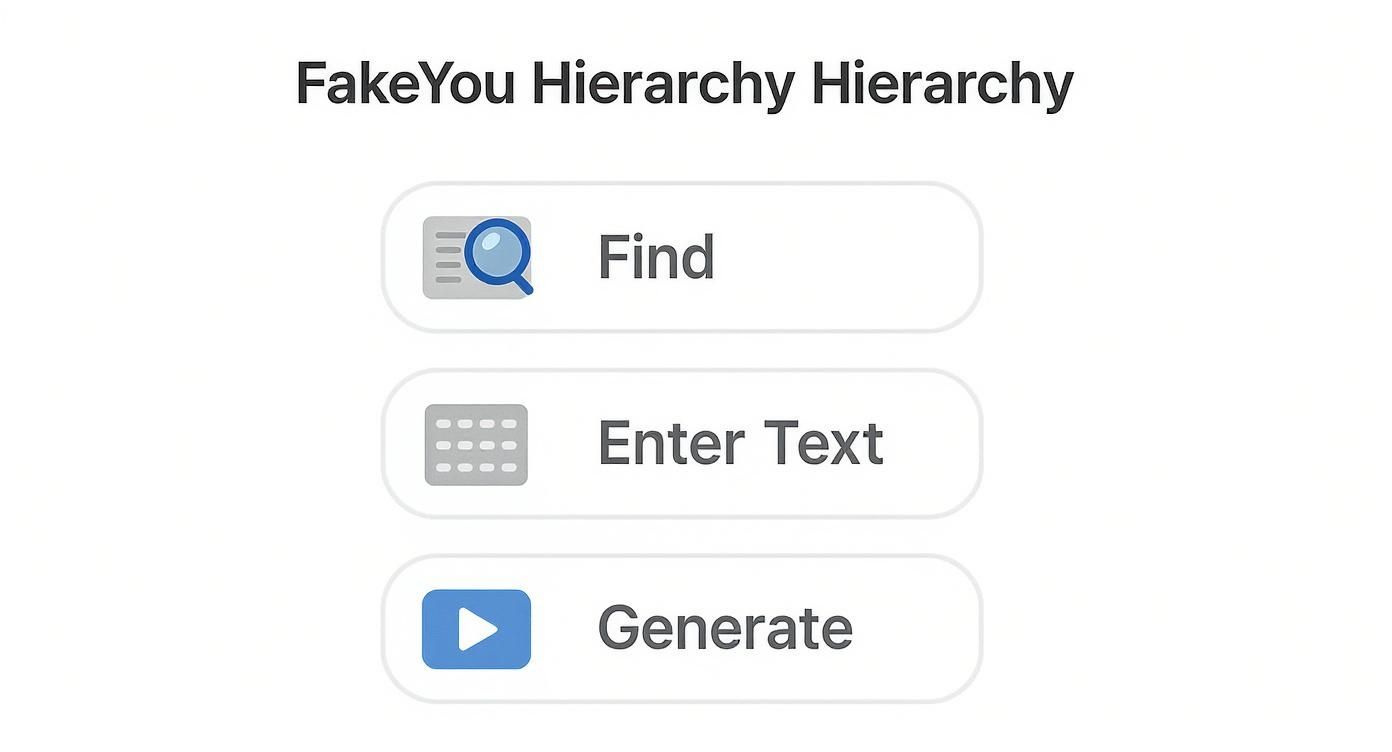
This straightforward workflow is ideal for a content creator, but it’s just not built for the automated, high-volume demands of a business.
When you get down to the nitty-gritty, the differences between FakeYou and a professional API become crystal clear. A business that needs to generate thousands of audio clips a day has a completely different set of priorities than a YouTuber who just needs one funny voice line for a video.
To really see the contrast, it helps to put them side-by-side.
| Feature | FakeYou Text to Speech | Professional TTS API (e.g., Lemonfox.ai) |
|---|---|---|
| Primary Use Case | Entertainment, memes, personal projects | Commercial applications, enterprise software, accessibility |
| Voice Quality | Variable; depends on community-trained models | Consistent, studio-grade, and highly realistic |
| Speed (Latency) | Can have long queues, not for real-time use | Near-instantaneous (milliseconds), built for real-time |
| Reliability | No uptime guarantee; a community project | High uptime guaranteed by a Service Level Agreement (SLA) |
| Legal & Commercial Use | Legally risky; uses copyrighted characters/voices | Clear licensing for commercial use is provided |
| Scalability | Designed for single, manual generations | Built to handle millions of requests automatically |
| Developer Integration | No official API for direct integration | Robust, well-documented API for easy integration |
This table shows that while both create audio from text, they are fundamentally different tools for different jobs.
For a business, predictability is everything. A professional API comes with a service-level agreement (SLA) that guarantees performance, which is a must-have. A community platform like FakeYou, on the other hand, offers a fantastic collection of assets with no such guarantee. The right choice really hangs on whether your project can handle a bit of risk and unpredictability.
Another huge factor is scale. A professional API is engineered to handle millions of requests without even blinking. FakeYou is built for individual users making clips one by one. This fundamental difference is also mirrored in how they charge for their services.
FakeYou’s Pro plan is $15 per month for 1-minute TTS clips, while the Elite tier at $25 per month gets you 2-minute generations. These plans are perfectly tailored for creators. However, they stand in stark contrast to business-focused TTS solutions that often use pay-as-you-go pricing built for massive volume. You can find more analysis on how FakeYou's pricing stacks up in the creator market.
At the end of the day, FakeYou and professional TTS APIs aren't really competitors—they serve two completely different audiences. FakeYou text to speech is a champion at providing a massive, fun, and accessible library for creative expression. Professional services provide the reliable, legally sound, and scalable engine you need to build and run a business on.
The world of AI voice generation is moving at a blistering pace, leaving the early days of meme-making tools in the dust. The technology is growing up fast, pushing toward a future where synthetic voices aren't just passable mimics, but genuinely expressive and instantly responsive. For a platform like FakeYou text to speech, this shift brings a wave of exciting possibilities—and some serious new challenges.
The next big leap isn't just about nailing someone's voice perfectly; it's about making that voice interact in real-time. We're talking about generating speech with almost zero delay, a non-negotiable step for creating believable video game characters or AI assistants you can actually have a conversation with.
One of the most fascinating frontiers is getting AI to generate speech with real emotion. Instead of a flat, robotic tone, imagine a model that understands the context of a sentence and can deliver it with a hint of joy, a touch of sadness, or a burst of excitement. An AI voice actor that hits the perfect dramatic note, all from a simple text prompt.
This drive for emotional depth is happening right alongside a huge expansion in language support. The goal isn't just to add more languages to a dropdown menu. It's to clone a voice in English and then have it speak fluent Japanese, all while keeping its unique vocal signature. That kind of capability could blow the doors open for content creators and businesses looking to go global overnight.
The ultimate goal is to erase the line between human and synthetic speech, creating AI voices that are not only indistinguishable from our own but also capable of the same emotional range and linguistic flexibility.
This whole movement is being driven by demand from industries far outside of online entertainment. Companies are waking up to the need for sophisticated, low-latency voice solutions to build better, safer user experiences.
Take the automotive industry, for example. It's now the fastest-growing market for Text-to-Speech tech, with a projected compound annual growth rate of 14.80%. Car manufacturers need on-device voice assistants that respond instantly so drivers can change a song or get directions without ever taking their eyes off the road.
Meanwhile, the Asia-Pacific region is seeing the quickest overall market growth, projected at a 15.30% CAGR. This boom is fueled by massive smartphone adoption and a consumer base that’s already comfortable using voice-first technology. You can read the full research on these TTS market trends to get a clearer picture of how these forces are shaping the industry.
For a community-focused platform like FakeYou, staying relevant in this future is the name of the game. It might mean integrating more advanced, emotionally-aware models or finding new ways for its users to contribute to building these next-generation voice tools.
But as these AI voices become more powerful and lifelike, they’ll also force us all to grapple with tougher ethical questions about consent, authenticity, and what identity even means in a world of perfect digital copies. The future of synthetic voice isn't just a technical puzzle—it's a creative and ethical one we'll have to solve together.
Diving into an AI voice tool like FakeYou, especially one built by a community, can bring up a few questions. Let's clear up some of the most common ones people ask when they're getting started.
Yes, the basic FakeYou text to speech feature is free to use. You can jump in and generate audio without pulling out your credit card. The catch? Your request gets tossed into a public queue, and if the site is busy, you might be in for a pretty long wait.
If you need your audio faster or want more power, FakeYou offers paid subscription plans. Upgrading usually gets you a few key perks:
This is where things get tricky, and you absolutely need to be careful. If you're just making a funny video for your friends or a clear parody for personal use, you're probably on safer ground. The legal risks jump dramatically the moment you use that audio commercially.
Think about it this way: using a famous cartoon character's voice could trigger a copyright claim from the studio that owns it. And using a real celebrity's voice for an ad or endorsement without their permission? That's a direct path to violating their right of publicity. Always think through the legal side before you publish anything you've made with FakeYou.
Remember, the responsibility for using AI-generated audio ethically and legally rests entirely with you. The platform's terms of service will make this crystal clear.
With FakeYou, the quality of your audio comes down to one thing: the specific voice model you pick. Since these are all created and trained by different people in the community, the quality is all over the map.
To find the hidden gems, look for popular models with lots of good ratings. A great strategy is to listen to a bunch of the public examples people have already made with a voice before you waste any time on it. A little pro tip: playing around with punctuation like commas and periods in your script can also make a big difference, helping guide the AI's rhythm and inflection for a more natural delivery.
Ready to move beyond the creative playground and build with a reliable, scalable voice API? Lemonfox.ai offers studio-quality text-to-speech and speech-to-text solutions designed for developers and businesses. Start your free trial today and access professional-grade voice technology at a fraction of the cost.