
First month for free!
Get started
Published 12/7/2025
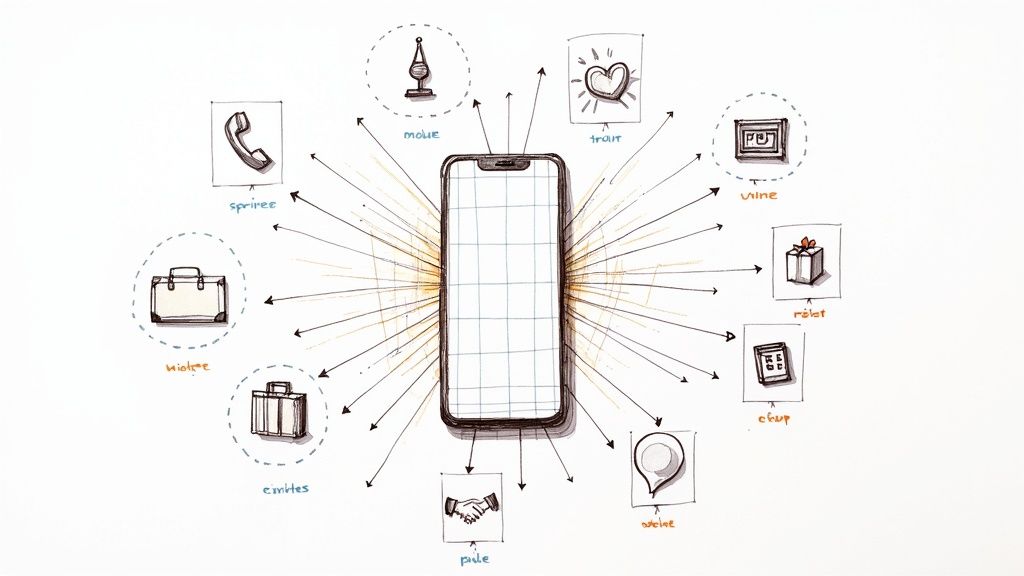
In a world of instant messaging and emails, a thoughtfully crafted voicemail can set you apart, making a powerful first impression before you even speak to someone directly. The standard "leave a message" is a missed opportunity. The right greeting can convey professionalism, warmth, and efficiency, turning a missed call into a positive connection and setting clear expectations for the caller. It's a small detail that has a significant impact on your personal and professional brand.
This guide moves beyond the basics to provide a comprehensive collection of high-quality, ready-to-use personal voice message greetings. We will explore 8 distinct categories, offering practical scripts and a strategic breakdown for each one. You will find everything from professional business greetings and friendly, approachable messages to creative, brand-aligned corporate scripts and accessibility-focused options.
We’ll break down the what, why, and how of each style, equipping you with the tactics to craft the perfect message for any situation. You'll learn how to communicate your status, guide the caller, and reinforce your image effectively. We will also briefly touch upon how modern tools like AI-powered text-to-speech can help you achieve a studio-quality recording in seconds, ensuring your greeting is always clear, consistent, and professional. Let's get started.
The professional business voicemail is the cornerstone of corporate communication, designed for clarity, efficiency, and credibility. This type of personal voice message greeting is concise and formal, immediately informing the caller who they've reached, their role, and what to do next. It eliminates ambiguity and projects a polished, reliable image, which is why it's a non-negotiable standard in companies like Microsoft and Ernst & Young.
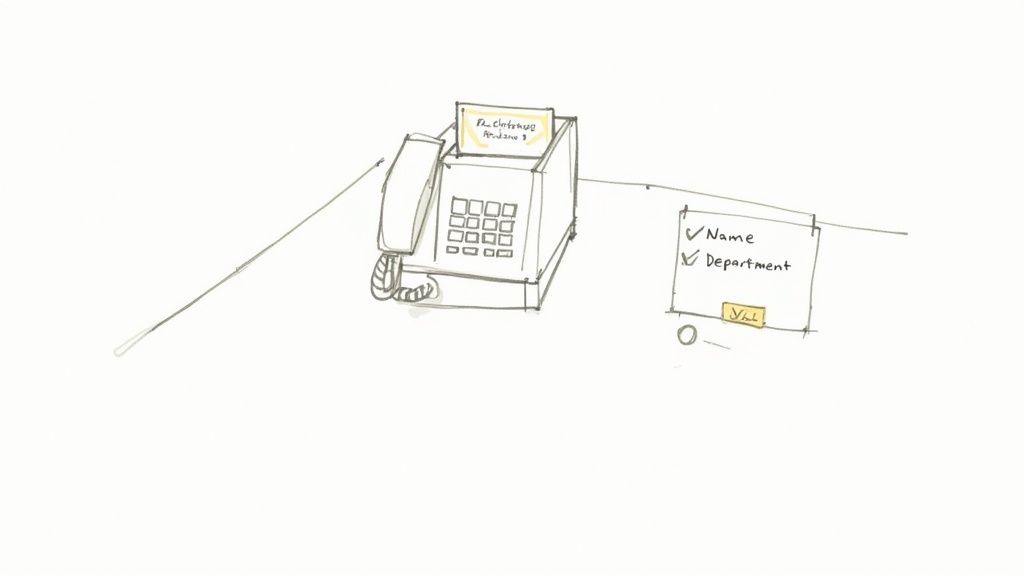
This greeting's primary function is to manage caller expectations effectively. By providing a clear timeframe for a return call, it conveys respect for the caller's time and establishes a professional boundary.
The structure is intentionally formulaic to ensure consistency and professionalism across an organization. It’s built on a foundation of essential information delivered in a predictable sequence.
Key Insight: The power of this greeting lies in its predictability. Callers know exactly what information to listen for and what to provide, which streamlines communication and reduces follow-up friction.
To implement this effectively, focus on precision and clarity.
The friendly and approachable greeting strikes a perfect balance between professionalism and personality. It’s designed to be warm and welcoming, creating an immediate rapport with the caller. This style of personal voice message greeting uses a personable tone to make callers feel valued and comfortable, making it a staple in customer-facing roles, creative agencies, and startups where human connection is a key business asset.
This greeting's core function is to humanize communication. By sounding genuinely pleased to hear from the caller, it sets a positive and collaborative tone from the first interaction, which can significantly enhance the customer or client experience before a conversation even begins.
The structure is less rigid than a formal business greeting, allowing for personality while still conveying essential information clearly. It’s built on a foundation of warmth and clarity.
Key Insight: The power of this greeting is its emotional impact. A friendly tone can disarm a frustrated caller or encourage a hesitant one, making them more receptive to a callback and fostering a positive brand perception.
To master this style, focus on conveying genuine warmth and competence.
The multilingual voicemail greeting is an essential tool for global businesses and organizations serving diverse communities. This type of personal voice message greeting offers callers options in multiple languages, ensuring clear communication and demonstrating cultural respect. It’s a standard practice for international corporations like Google and Amazon, as well as critical services like healthcare providers, to foster an inclusive and accessible environment for every caller.
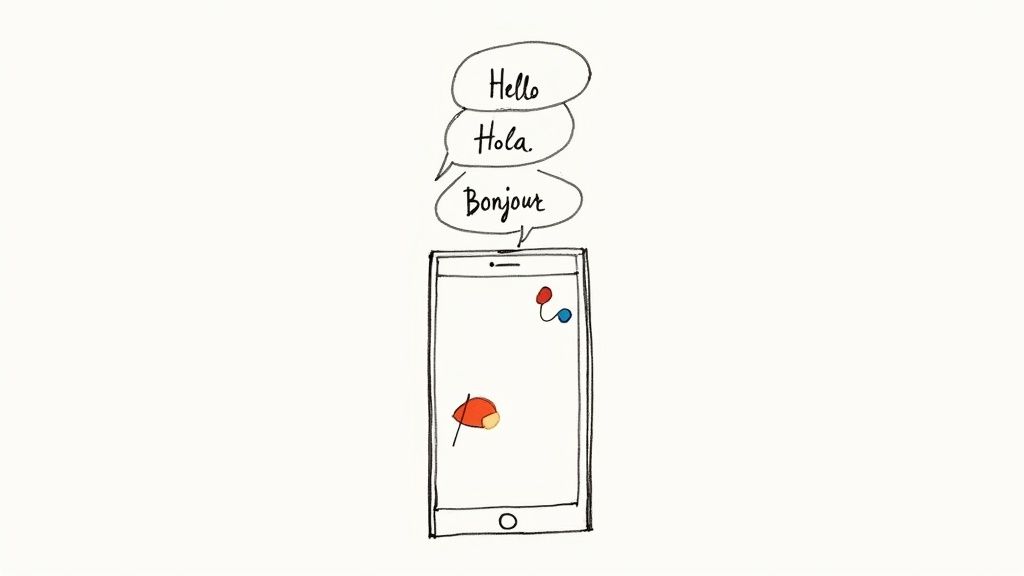
This greeting’s primary function is to eliminate language barriers at the first point of contact. By immediately offering a choice, it makes callers feel valued and understood, significantly improving their experience and ensuring they can navigate the system to leave a coherent message.
The structure is designed for immediate clarity and user empowerment, allowing callers to self-select their preferred language before hearing the main message. This prevents confusion and frustration.
Key Insight: The power of this greeting is in its proactive inclusivity. It removes the burden from the non-native speaker and signals that the organization is prepared and equipped to serve them effectively.
To implement this effectively, focus on authenticity and quality.
The creative, personality-driven greeting transforms a standard voicemail into a memorable brand statement. It leverages humor, clever wordplay, or a unique narrative to showcase individual character, making it a powerful tool for professionals in creative fields. This style moves beyond mere information delivery to create an engaging experience, leaving a lasting impression on the caller, a technique often used by comedians and voice actors to stand out.

This greeting's core function is to build a personal connection and reinforce a creative identity instantly. By injecting personality, you make the mundane act of leaving a message enjoyable and reflective of your unique brand or artistic style.
The structure is intentionally flexible to allow for creativity but must still anchor itself in essential information. It’s about balancing a memorable performance with practical communication needs.
Key Insight: The success of this greeting hinges on authenticity. It must genuinely reflect your personality and brand, otherwise, it can feel forced or unprofessional.
To execute this greeting effectively, focus on blending creativity with clarity.
The time-specific and contextual greeting is a dynamic approach to voicemail that provides callers with real-time information about your availability. This type of personal voice message greeting changes based on the time of day, day of the week, or a specific event like a vacation or conference. It's a hallmark of professionals in client-facing roles, such as consultants and service providers, who need to manage expectations with precision.
This greeting’s primary function is to give the caller hyper-relevant information, which demonstrates foresight and a high level of organization. By stating, "I'm currently at the annual conference and will be checking messages intermittently," you prevent caller frustration and provide immediate clarity on potential response delays.
The structure is adaptable, designed to be modified as your schedule changes. It’s built on providing timely context that is immediately useful to the person on the other end of the line.
Key Insight: The power of this greeting lies in its proactivity. It answers the caller's immediate questions ("Why aren't they answering?" and "When can I expect a reply?") before they even have to ask.
To use this greeting effectively, you must be disciplined about keeping it updated.
The brand-aligned corporate voicemail transforms a standard greeting into a strategic brand touchpoint. This type of personal voice message greeting goes beyond simple identification by infusing the company's core values, mission, or tagline directly into the message. It ensures every caller interaction, even a missed one, reinforces the brand's identity, a practice perfected by image-conscious companies like Apple and Rolex.
This greeting’s primary function is to create a seamless and consistent brand experience. By aligning the voicemail's tone and language with marketing materials and company culture, it strengthens brand recall and projects a unified, professional front.
The structure is intentionally designed to balance personal identification with powerful brand messaging. It turns a routine communication channel into a subtle yet effective marketing tool.
Key Insight: The power of this greeting is its ability to extend the brand experience into every corner of communication. It ensures that even when a call is missed, the brand's voice is heard, building trust and consistency.
To implement this effectively, focus on integrating brand identity without sacrificing clarity.
The accessibility-focused greeting is a specialized personal voice message greeting engineered for inclusivity. It is designed to accommodate callers with hearing impairments, language barriers, or other disabilities by providing clear, alternative ways to communicate. This approach prioritizes universal access, ensuring that every caller, regardless of ability, can leave a message effectively. It's a standard practice for public-facing organizations like the FDA and healthcare providers.
This greeting's core function is to remove communication barriers. By explicitly mentioning services like the Telecommunications Relay Service (TRS) or offering text and email alternatives, it demonstrates a commitment to equitable service and compliance with accessibility standards like the Americans with Disabilities Act (ADA).
The structure is intentionally direct and informative, guiding callers to the communication method that best suits their needs. It is built on a foundation of clarity, simplicity, and providing multiple contact pathways.
Key Insight: The power of this greeting is its proactive inclusivity. By anticipating and addressing the needs of diverse users upfront, it fosters trust and ensures no one is excluded from communication.
To implement this greeting effectively, focus on clarity, simplicity, and high-quality audio.
The Interactive Voice Response (IVR) greeting is a sophisticated automated system that directs callers to the right department through a menu of options. Rather than a simple personal voice message greeting, it acts as a digital receptionist, using voice or touch-tone inputs to route high volumes of calls efficiently. It is the standard for large organizations like Delta Airlines, Comcast, and major banks, where call segmentation is critical for operational success.
This system's primary function is to improve first-contact resolution by connecting callers with the exact resource they need without human intervention. It streamlines customer service, reduces wait times, and allows human agents to focus on more complex inquiries.
The structure is meticulously designed to create a logical and user-friendly navigation path. It guides the caller from a general inquiry to a specific solution through a series of clear, concise choices.
Key Insight: The effectiveness of an IVR lies in its ability to simplify complexity. By anticipating the caller's primary needs and presenting them as clear choices, it empowers users and dramatically improves workflow efficiency.
To implement an effective IVR, focus on user experience and clarity.
| Greeting | 🔄 Implementation complexity | ⚡ Resource & maintenance needs | ⭐ Expected effectiveness | 📊 Key advantages / impact | Ideal use cases (💡 quick tip) |
|---|---|---|---|---|---|
| Professional Business Voicemail | Low — simple scripted recording, occasional updates | Low — basic phone/mic; periodic edits | High ⭐ — builds credibility and trust | Clear expectations; reduces callback confusion | Corporate employees, client-facing staff (💡 Keep <30s; include callback window) |
| Friendly and Approachable Greeting | Low–Moderate — tone tuning and practice | Low — good mic and rehearsal time | High ⭐ — creates rapport and positive impressions | Memorable; eases caller anxiety; personable | Hospitality, startups, customer service (💡 Smile while recording; stay concise) |
| Multilingual Voicemail Greeting | Moderate–High — menu design and multiple recordings | High — native speakers, production, menu maintenance | High ⭐ — improves accessibility and reach | Reduces language barriers; signals inclusivity | Multinational firms, healthcare, public services (💡 Limit to 2–3 languages; test navigation) |
| Creative and Personality-Driven Greeting | Low–Moderate — creative concept and delivery | Low–Moderate — voice talent/time; refreshes needed | Variable ⭐ — very memorable if audience-aligned | Distinctive branding; entertains callers | Entertainers, creatives, personal brands (💡 Keep core info clear; test with audience) |
| Time-Specific and Contextual Greeting | Moderate — manual or automated message changes | Moderate — admin time or automation integrations | High ⭐ — sets accurate availability expectations | Reduces frustration; manages caller expectations | Consultants, field staff, variable schedules (💡 Set calendar reminders; include urgent contact) |
| Brand-Aligned Corporate Voicemail | Moderate — centralized templates and governance | Moderate — training, voice talent, compliance checks | High ⭐ — enforces consistent brand experience | Strengthens identity; consistent customer interactions | Large enterprises, customer-facing teams (💡 Provide standard script templates) |
| Accessibility-Focused Greeting | Moderate — compliance planning and testing | Moderate–High — transcription/relay services, high audio quality | High ⭐ — ensures access and legal compliance | Inclusive access; expands audience; ADA alignment | Government, healthcare, education (💡 Offer multiple contact methods; test with users) |
| Interactive Voice Response (IVR) Greeting | High — complex flow design, integrations, testing | High — IVR platform, development, analytics, maintenance | High ⭐ (for scale) — effective routing but UX dependent | Efficient routing; 24/7 operation; analytics for optimization | Large enterprises, call centers, public services (💡 Keep menus ≤4‑5 levels; always offer agent option) |
We've explored a wide spectrum of personal voice message greetings, moving far beyond the generic, default recordings that callers often encounter. From the crisp professionalism of a business voicemail to the engaging creativity of a personality-driven message, the core lesson is clear: your greeting is a powerful, yet often overlooked, touchpoint. It’s your first line of communication when you can't be there in person, setting the tone for every interaction that follows.
Mastering these greetings is about more than just conveying information; it's about crafting an experience. A well-designed message respects the caller's time, provides clear instructions, and reflects your personal or professional brand. Whether you're building a multilingual greeting to welcome a global audience or an accessibility-focused message to ensure inclusivity, each example demonstrates a strategic approach to communication. The key is intentionality.
Reflecting on the diverse examples covered, several core principles stand out as universally applicable:
The true value of this guide lies in its application. Don't just read the examples; use them as a launchpad for your own custom messages. Start by auditing your current voicemail greetings across your personal and professional lines. Do they align with the image you want to project? Are they clear, concise, and helpful?
Choose one greeting to update today. Script it out, read it aloud to check for flow and tone, and then record it. Remember, this isn't a permanent decision. You can, and should, update your greetings as your circumstances change, such as when you're on vacation or working on a specific project. By embracing the power of personal voice message greetings, you transform a simple utility into a strategic asset that enhances your communication, strengthens your relationships, and ensures every missed call leaves a positive and lasting impression.
Ready to create flawless, professional-sounding greetings without the hassle of recording? The advanced Text-to-Speech API from Lemonfox.ai can instantly convert your scripts into natural, high-quality audio in multiple languages and voices. Perfect your personal voice message greetings and IVR prompts by visiting Lemonfox.ai to explore the possibilities.